





 Landscape
Is GPS Positioning Truly Real-Time? — The Truth About "Real-Time" GPS Tracking
Admin 2026-07-16 332
Is GPS positioning truly real-time? This is one of the questions we hear most frequently from our enterprise clients—and one that demands a candid answer.
Almost every GPS tracker on the market advertises "real-time tracking," but as a responsible partner, I’d like to have a conversation with you: What does "real-time" actually mean?
Ⅰ. The Technical Definition of "Real-time"
When we talking about "real-time" in the field of GPS tracking, it does not mean "zero latency" or "instantaneity." Rather, it signifies that: The delay between the occurrence of an event and your ability to view and notify on tracking management platform or apps is so minimal that it has virtually no impact on your business decisions.
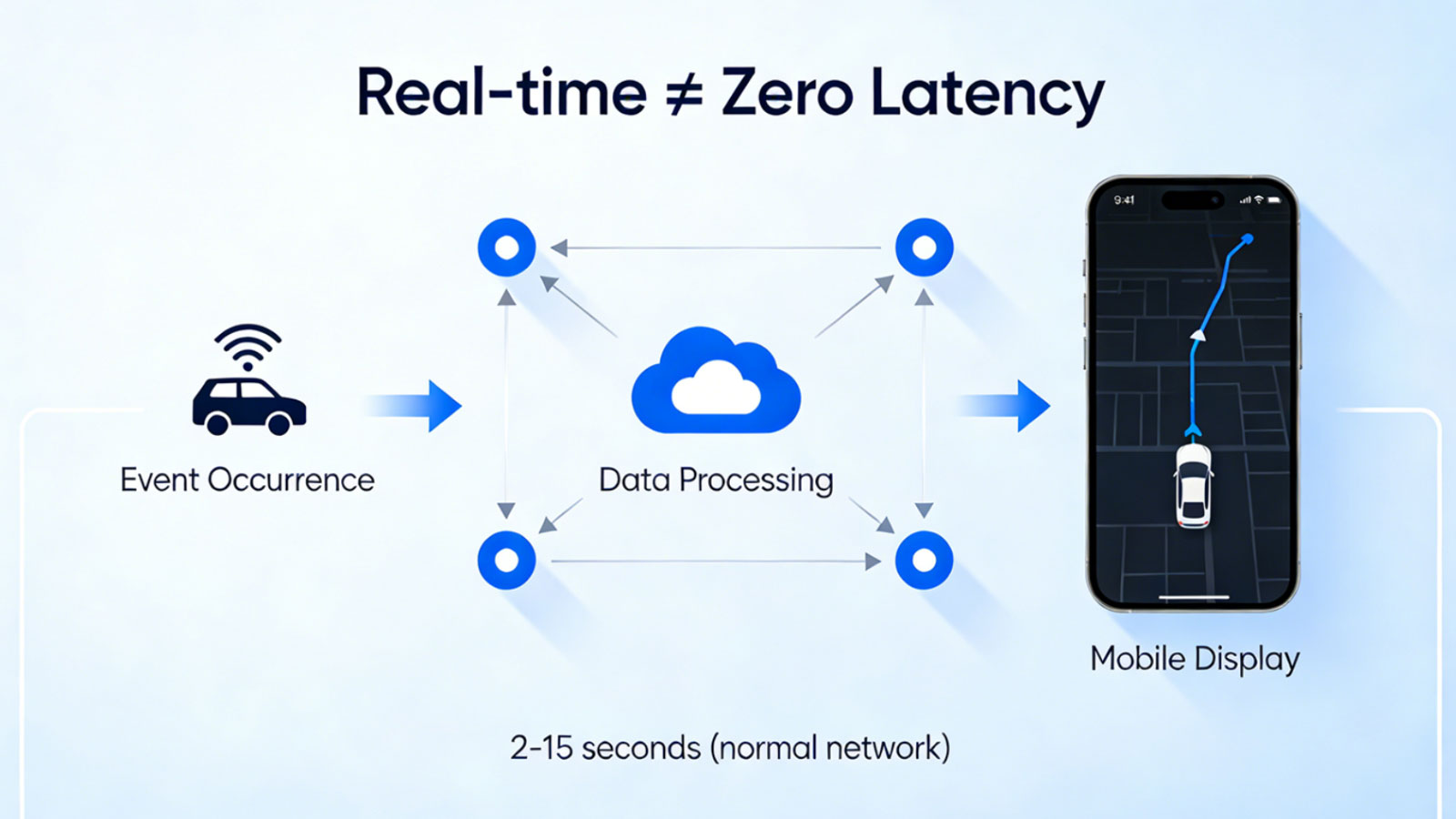
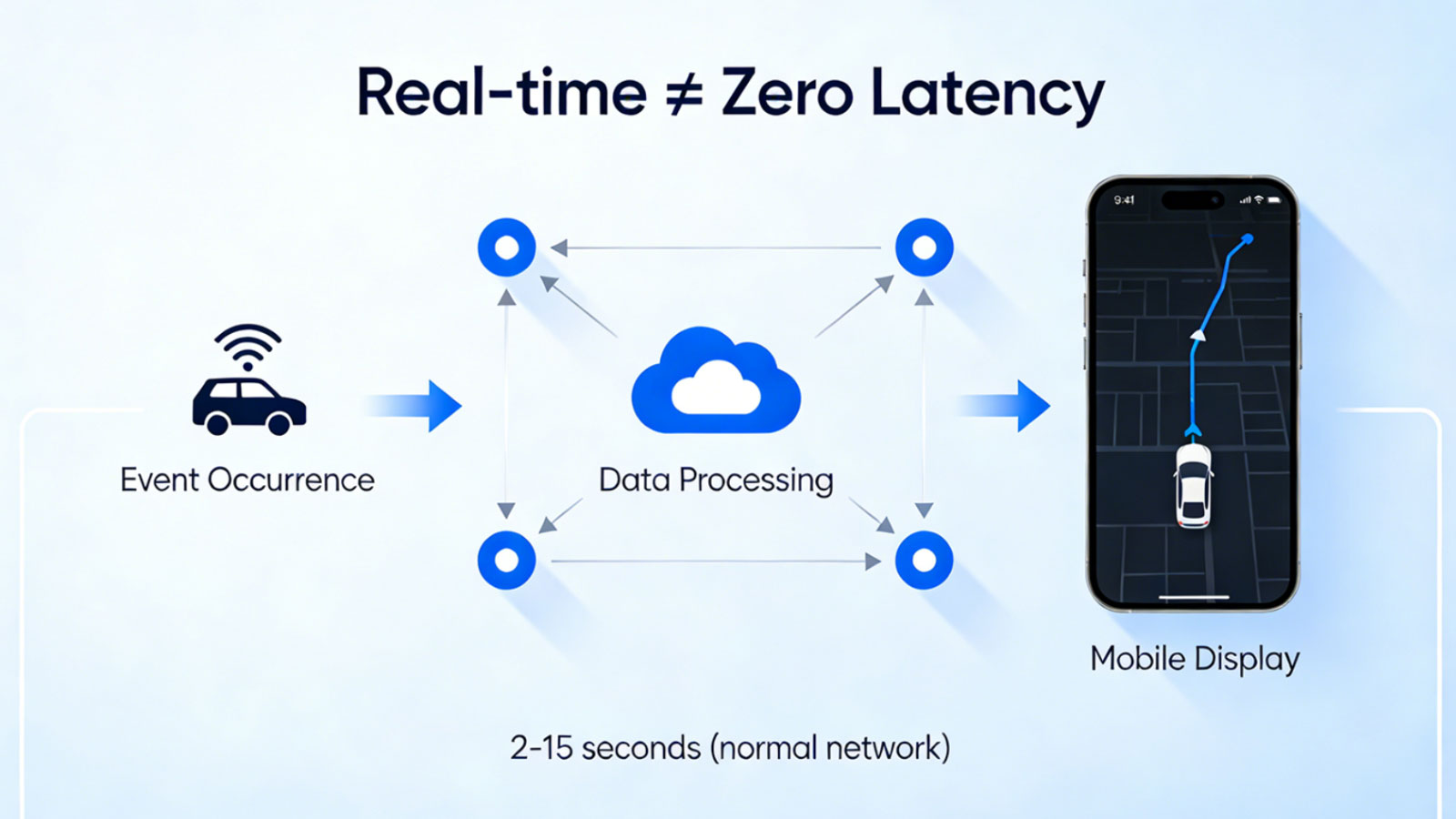
Specifically, the complete "real-time" pipeline looks like this example:
[Vehicle Movement] → [GPS Location Acquisition] → [Upload via 4G/2G] → [Cloud Processing] → [Push to Your Phone] → [Map Display]
Under normal network conditions, this end-to-end process typically takes 2 to 15 seconds.
Is a 2–15 second delay considered "real-time"?
For the vast majority of commercial applications—yes, absolutely.
You don't need to know the exact split second a vehicle turns that it has done.
You simply need to know its approximate current location and where it was a few minutes ago.
When an SOS alert is triggered, receiving a location-tagged notification within 15 seconds is more than sufficient for you to respond quickly.
Ⅱ. Why Is It Not "Zero Latency"?
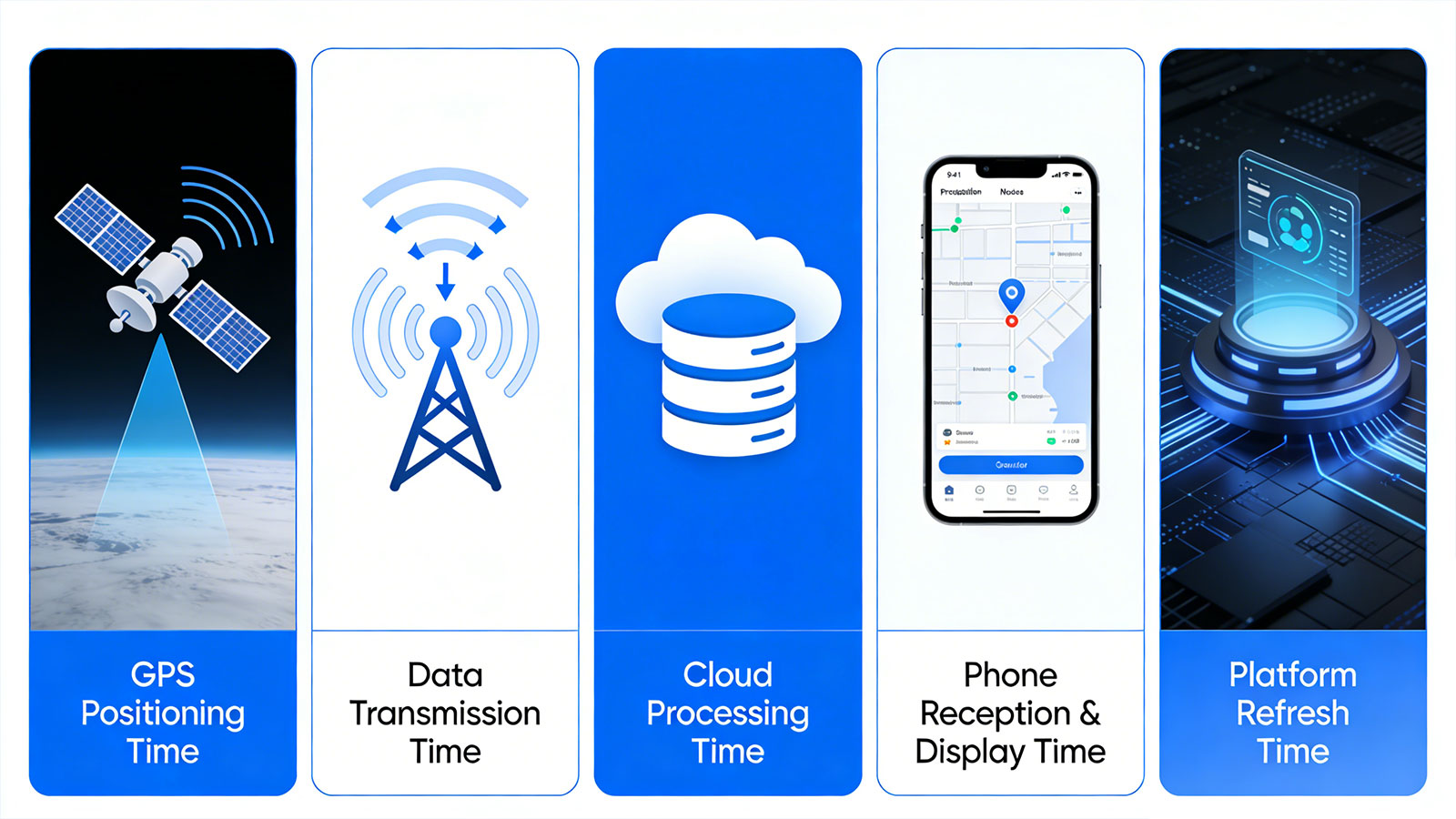
If you are curious why "zero latency" cannot be achieved, here are a few objective reasons you can reference:
2.1 GPS Positioning Itself Takes Time
The device needs to search for and receive satellite signals, then calculate its position. Even under optimal conditions, this process takes between 1 and 10 seconds.
2.2 Data Transmission Takes Time
Location data is uploaded to the cloud via the 4G network; traveling through base stations and internet routers, this step requires anywhere from a few hundred milliseconds to several seconds.
2.3 Cloud Engine Processing Takes Time
Our platform must decode the data, check geofencing rules, trigger any potential alerts, store the information in a database, and finally push it to your mobile phone—a process that takes a few hundred milliseconds.
2.4 Mobile Reception and Display Take Time
Once your mobile app receives the push notification, it needs to parse the data, refresh the map, and render the icons—adding another few hundred milliseconds to the total time.
2.5 Platform Refreshing Takes Time
In practice—and taking into account server performance and cost considerations—the backend refresh rate is typically set to around 15 seconds. It is not configured to be any faster, as doing so would result in significantly higher server costs.
When all these factors are combined, a total delay of 2 to 15 seconds represents excellent performance; in real-world scenarios, the actual latency typically falls within the range of 10 to 30 seconds.
Ⅲ. "Real-time" Standards in Different Scenarios
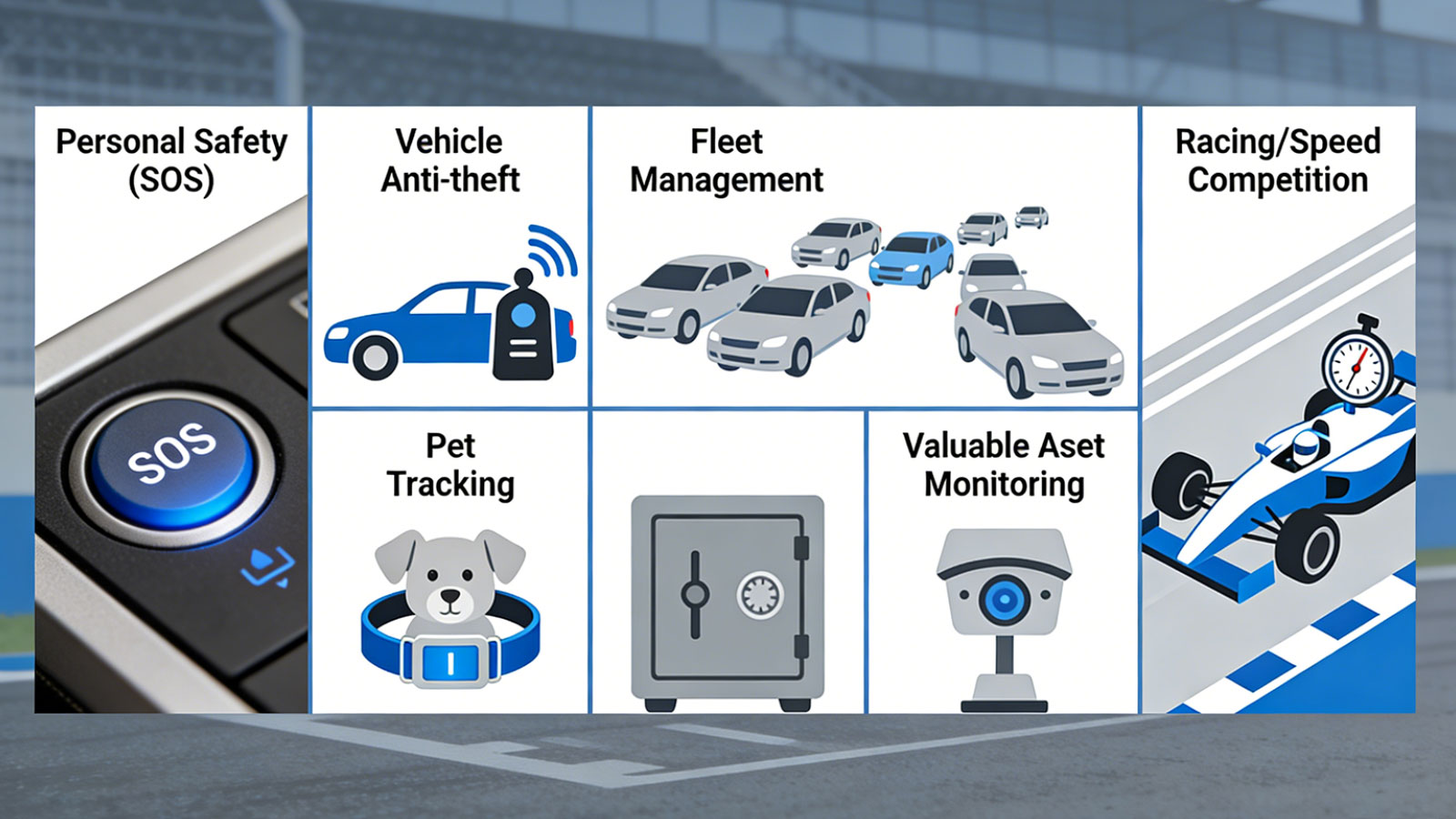
What level of latency is "acceptable"? This depends on your specific application scenario:
| No. | Application Scenarios | Typical Latency | Is it "Real-time"? | Description |
| 1 | Personal Safety (SOS) | 3-8 s | ✅ | Receive the distress location within seconds—sufficient for a timely response. |
| 2 | Vehicle Anti-theft | 5-15 s | ✅ | Be alerted when a vehicle is moved; however, tracking it down requires access to its historical movement trajectory. |
| 3 | Vehicle Anti-theft | 10-30 s | ⚠️ Acceptable | Dispatch operations do not require millisecond-level precision; minute-level granularity is sufficient. |
| 4 | Pet Tracking | 10-30 s | ✅ | Knowing which residential complex a dog is located in is adequate. |
| 5 | Valuable Asset Monitoring | 10-30 s | ✅ | Receive immediate notifications whenever an asset exits a designated geofence. |
| 6 | Racing | <1 s | ❌ | Receive immediate notifications whenever an asset exits a designated geofence. |
The key point is: for the vast majority of enterprise applications, a 15-second delay has absolutely no impact on business decisions.
Ⅳ. What Affects "Real-time" Capability?
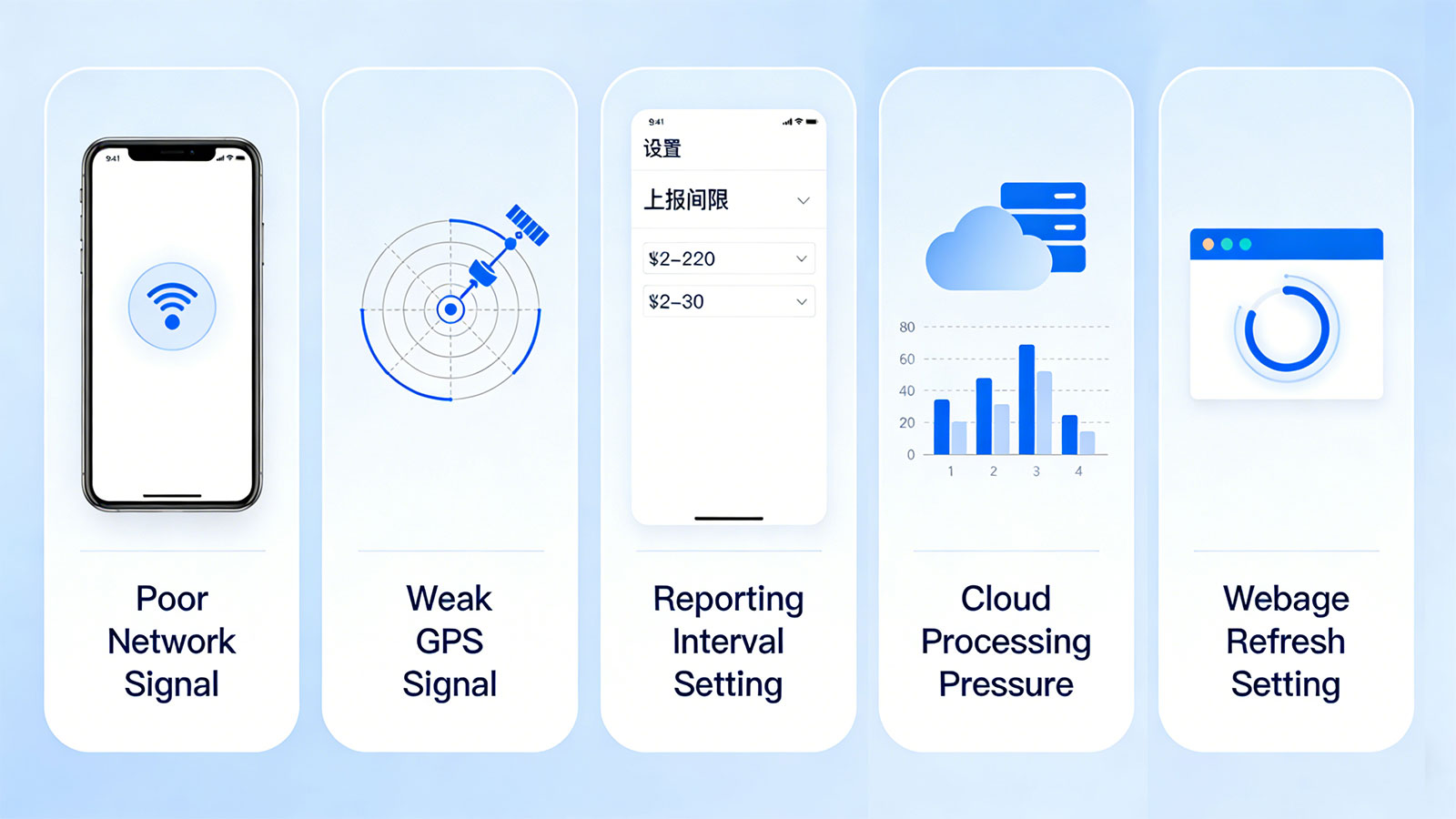
Even with our system, latency can increase under certain circumstances.
4.1 Poor Network Signal
The device is located in a signal fringe area, resulting in slow data uploads.
Your mobile phone is in an area with poor signal reception, causing delays in receiving push notifications.
4.2 Weak GPS Signal
If the device is located indoors, underground, or within an urban canyon (surrounded by tall buildings), acquiring a GPS fix inherently takes longer.
Occasionally, the system may initially rely on cell tower triangulation for positioning, waiting for the GPS signal to stabilize before updating to a precise location.
4.3 Reporting Interval Settings
If you configure the device to "report once per minute," the location data you see may be up to one minute old. This is not considered "latency," but rather the "reporting cycle." Important Distinction:
Reporting Interval: How often the device uploads its location data (configured by you).
End-to-End Latency: The time elapsed between the device uploading data and you being able to view it (a measure of our system's performance).
4.4 Cloud Processing Load
In extreme scenarios—such as when millions of devices are simultaneously online—the cloud platform may require a processing queue. We employ an elastic architecture to ensure that significant queuing does not occur under normal conditions; however, during certain extreme events (e.g., earthquakes or widespread alarms), brief delays may still occur.
4.5 Web Interface Refresh Rate
To conserve server resources, the display interface (web or app) is configured with a fixed refresh frequency of 10 to 15 seconds.
Ⅴ. How Does Huaten Global Ensure "Real-Time" Performance?
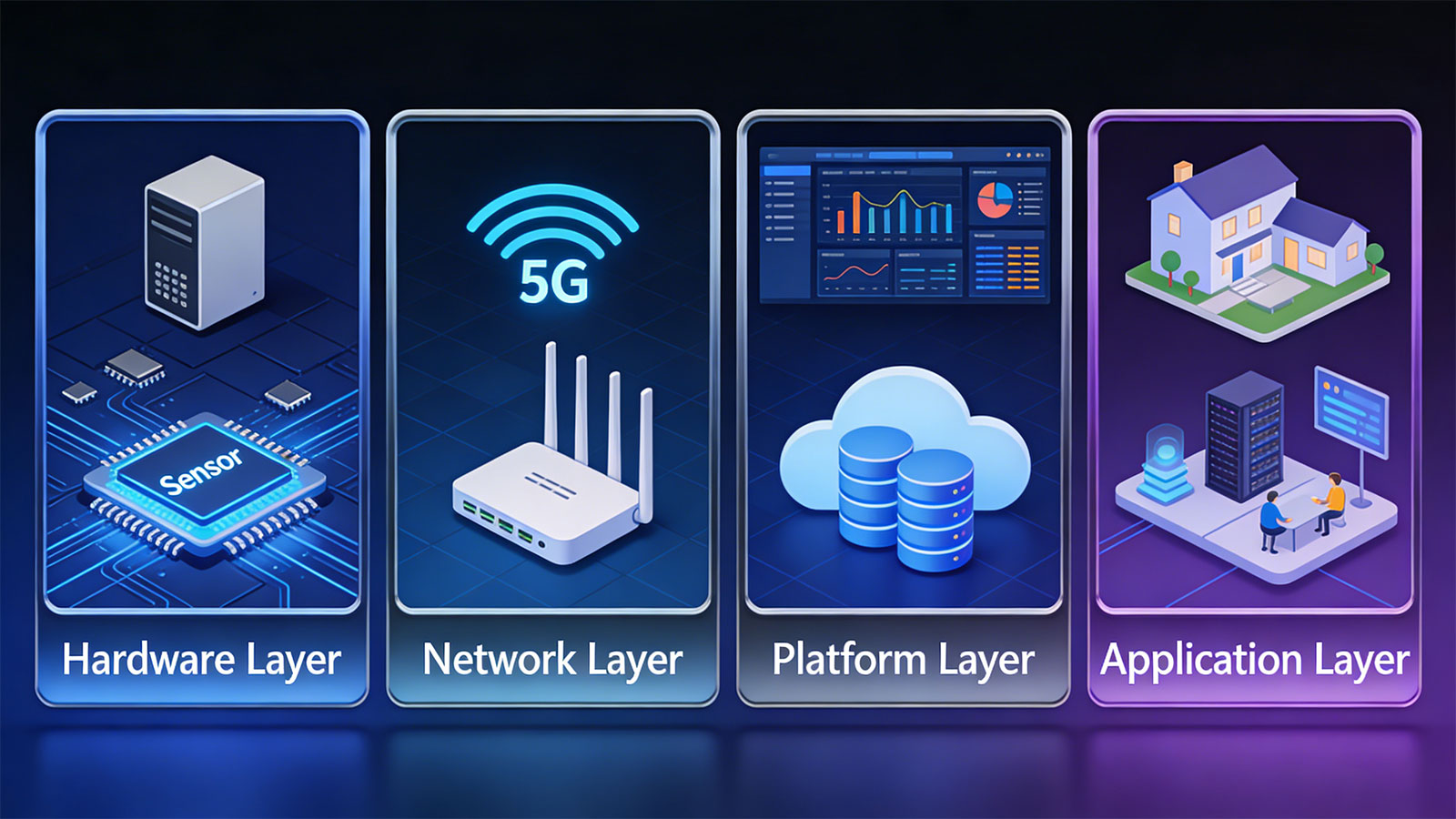
As a professional IoT solution provider, we ensure that latency remains within the optimal range across multiple layers.
5.1 Hardware Layer
Utilization of industrial-grade 4G modules to support high-speed data transmission.
Optimized antenna design to ensure stable data uploads even in weak signal environments.
5.2 Network Layer
Support for multiple carrier networks, with automatic selection of the strongest signal.
Establishment of direct connection channels with major carriers to minimize routing hops.
5.3 Platform Layer
Distributed cloud architecture with elastic scaling capabilities to handle sudden traffic surges.
Edge computing nodes for localized data processing, thereby reducing transmission distances.
Robust message queuing mechanisms to ensure smooth processing, even during instantaneous traffic spikes.
5.4 Application Layer
WebSocket push technology, offering speeds several times faster than traditional polling methods.
Global CDN acceleration to ensure rapid performance, regardless of your geographical location.
5.5 Measured Performance Data
Mainland China: Average end-to-end latency of 2.1 seconds.
Europe & North America: Average end-to-end latency of 3.4 seconds.
Southeast Asia: Average end-to-end latency of 2.8 seconds.
Extreme Weak Signal Environments: Latency may extend to 8–12 seconds.
Ⅵ. Do You Need "Real-Time" or "Fast Enough"?
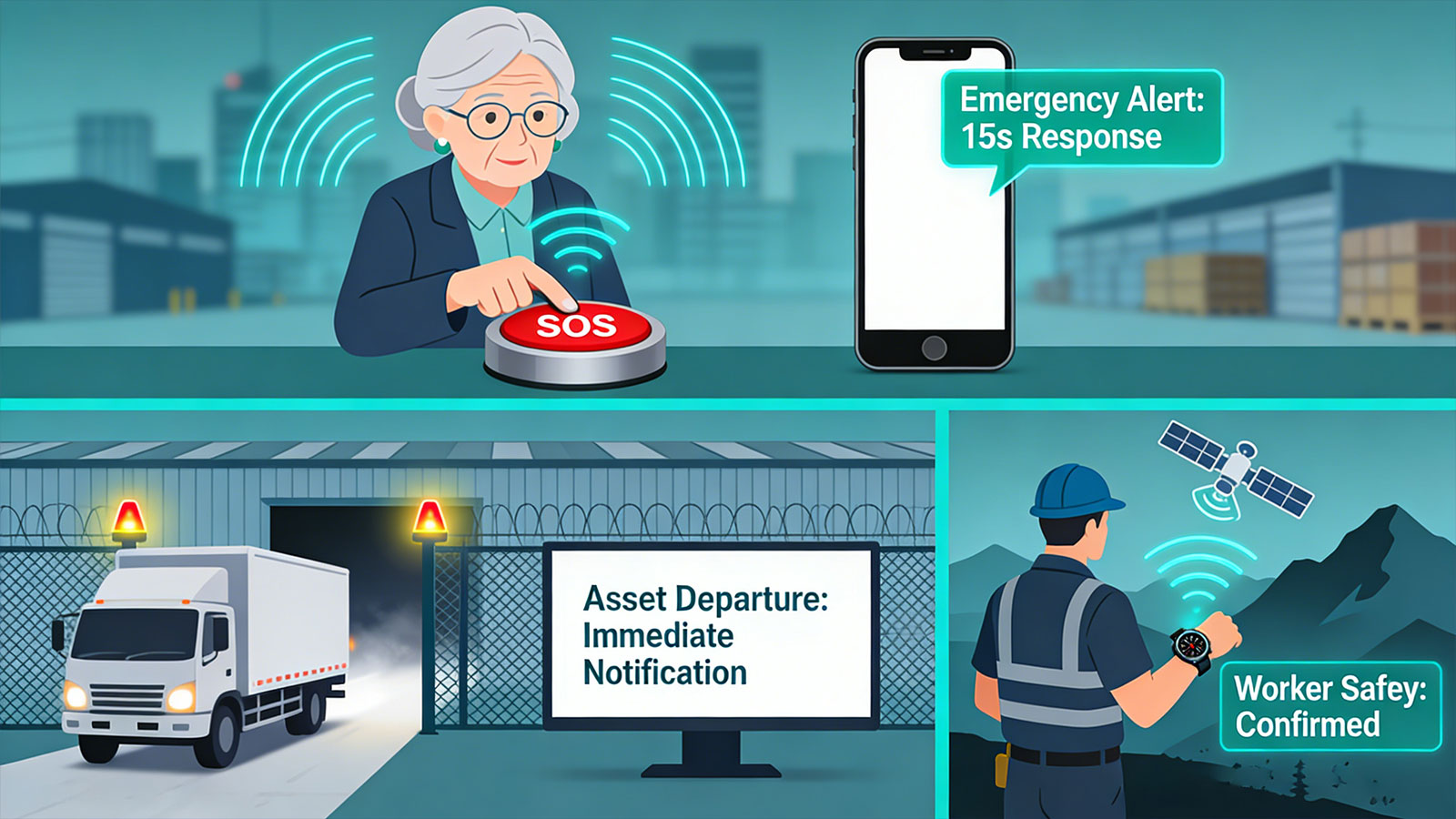
As a manufacturer with many years of experience in this Tracking and Safety industry, I would like to share a perspective with you: pursuing "absolute real-time" is pointless; the correct approach is to aim for a speed that is "sufficient for business needs."
When an elderly loved one presses the SOS button, you want to receive the alert within 15 seconds—our system delivers exactly that.
When your assets leave the warehouse perimeter, you want to know immediately—our system ensures you do.
When your employees are working in remote areas, you want to know if they are safe right now—our system makes that possible.
As for whether or not you see the exact instant a vehicle turns a corner—that really isn't important.
Ⅶ. Concluding Remarks
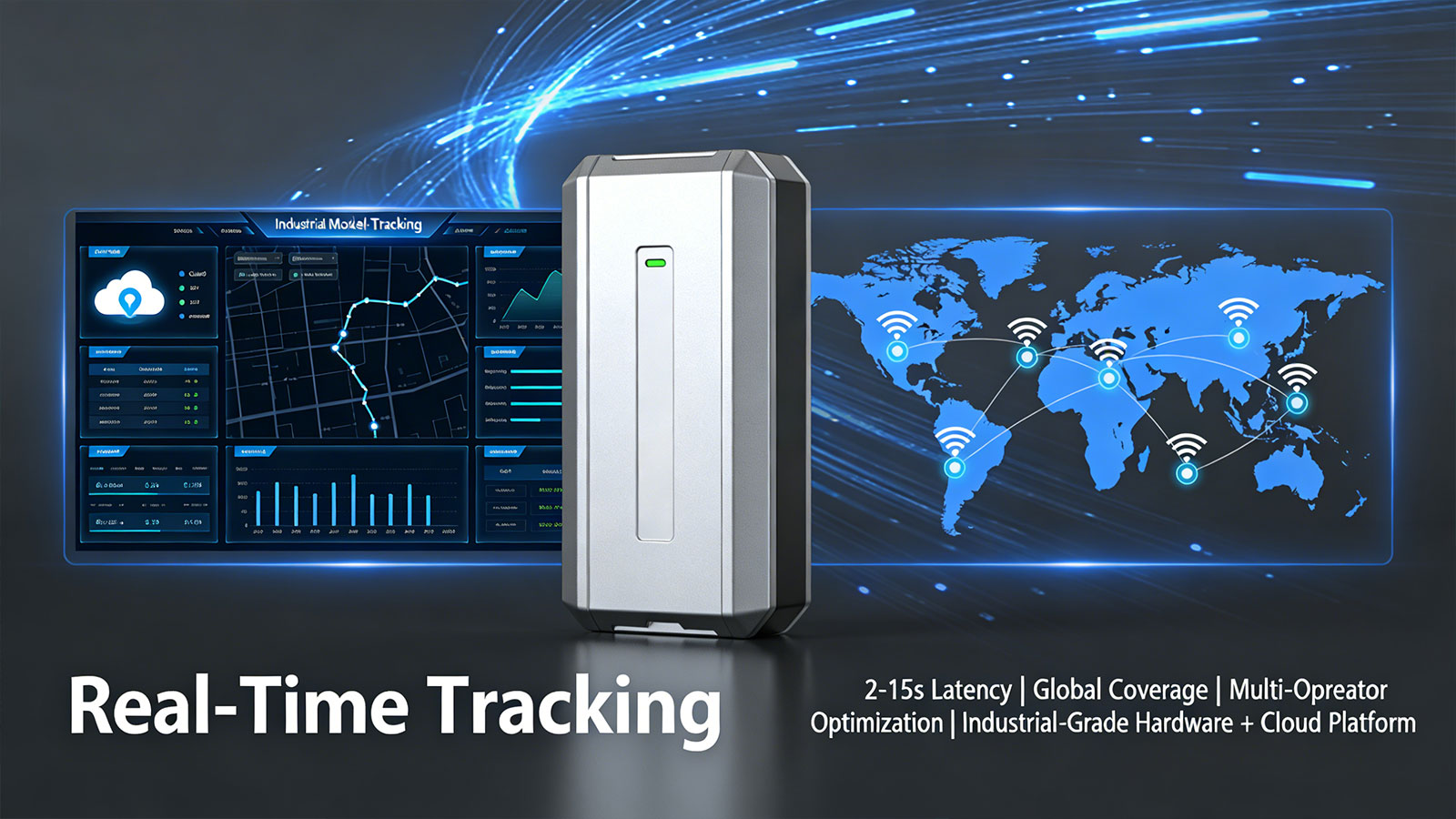
Yes, our tracking is truly real-time—measured by the standards of enterprise-grade applications.
Typical latency: 2–15 seconds
Global coverage, optimized across multiple carriers
Backed by industrial-grade hardware and a robust cloud platform
Transparent communication—no marketing wordplay
If you need to equip your family members, pets, assets, or vehicles with a tracker, our solution will allow you to truly experience the value of "real-time"—not the theoretical zero-latency of a laboratory, but rather the reliability, speed, and practical utility required in the real world.
If you have more stringent requirements regarding real-time performance, we invite you to contact our solutions team to explore a professional-grade, customized solution. For the vast majority of enterprise applications, however, our standard solution is fully sufficient to meet your needs.
Search
Previous
Battery Life Decoding: Seven Key Factors Affecting Your GPS Tracker Battery Duration
Next
Beyond Connectivity: What Your Tracker Can and Cannot Do When Cellular Networks Disappear?
Latest News
IP Protection Ratings is Not Permanent: Is Your GPS Tracking Device Truly Waterproof and Dustproof?
Is that Smartwatch Health Monitoring Medical Grade? - Focus on Trends, Not Medical Grade Disease Diagnosis Criteria
Battery Life Decoding: Seven Key Factors Affecting Your GPS Tracker Battery Duration
Is GPS Positioning Truly Real-Time? — The Truth About "Real-Time" GPS Tracking
Beyond Connectivity: What Your Tracker Can and Cannot Do When Cellular Networks Disappear?