





 Landscape
Battery Life Decoding: Seven Key Factors Affecting Your GPS Tracker Battery Duration
Admin 2026-07-16 532
Battery life is one of the most critical metrics for GPS trackers—and also one of the most frequently misunderstood. Why do some trackers boast a "3-year battery life" yet last only a few months in reality? Why does the battery life of the exact same device vary twofold depending on who is using it?
The answer is not simply a matter of "battery capacity"; rather, it is a complex engineering challenge determined by a confluence of multi-dimensional factors. As a leading manufacturer of GPS devices for health and safety monitoring, I will fully demystify the battery life formula for GPS trackers, helping you understand the true determinants of their operational longevity.
Ⅰ. The Underlying Logic of Battery Life: Conservation of Energy
The battery life of any tracker can be expressed using a simple formula:
Battery Life = Usable Battery Capacity ÷ Average Power Consumption
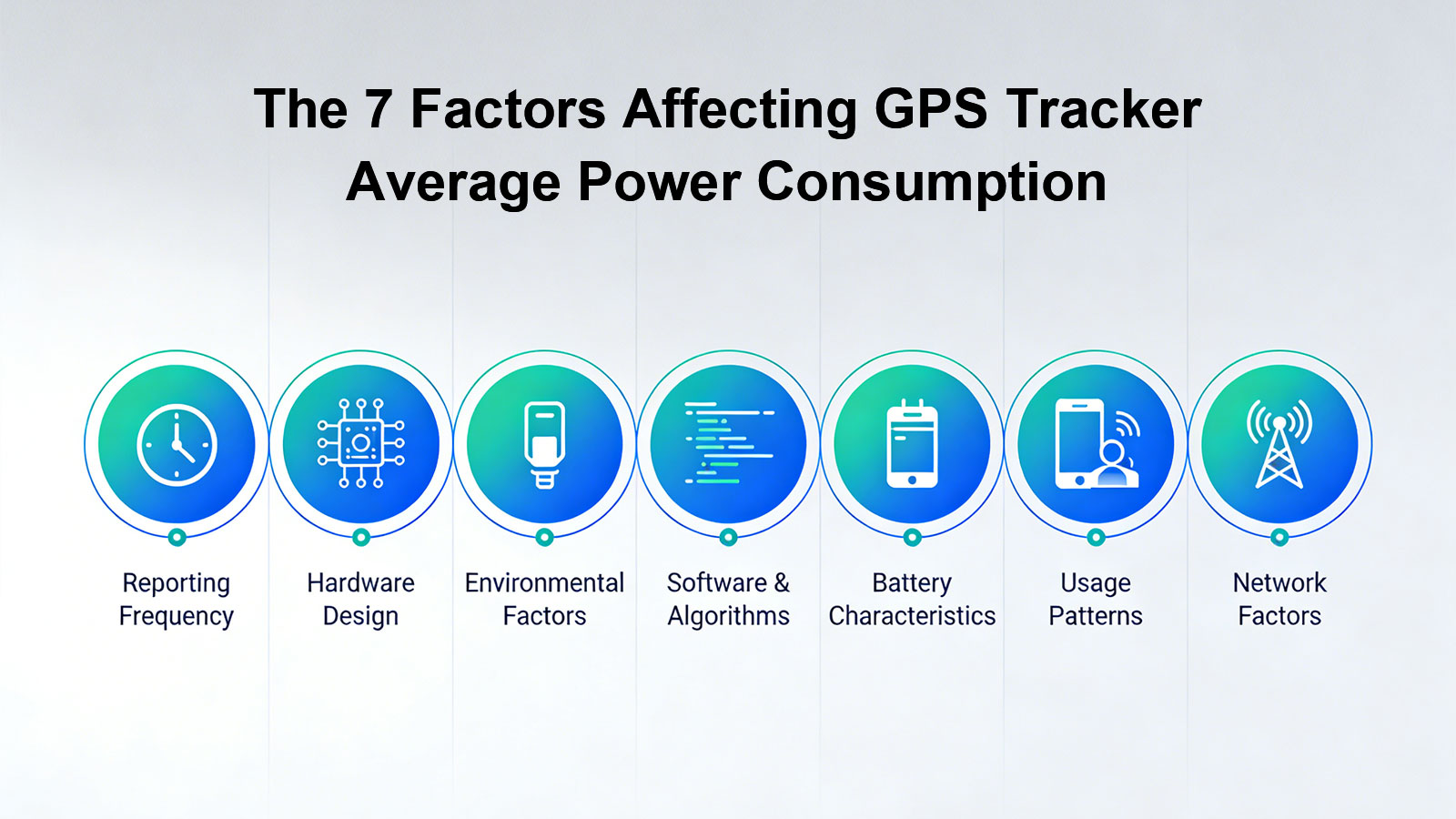
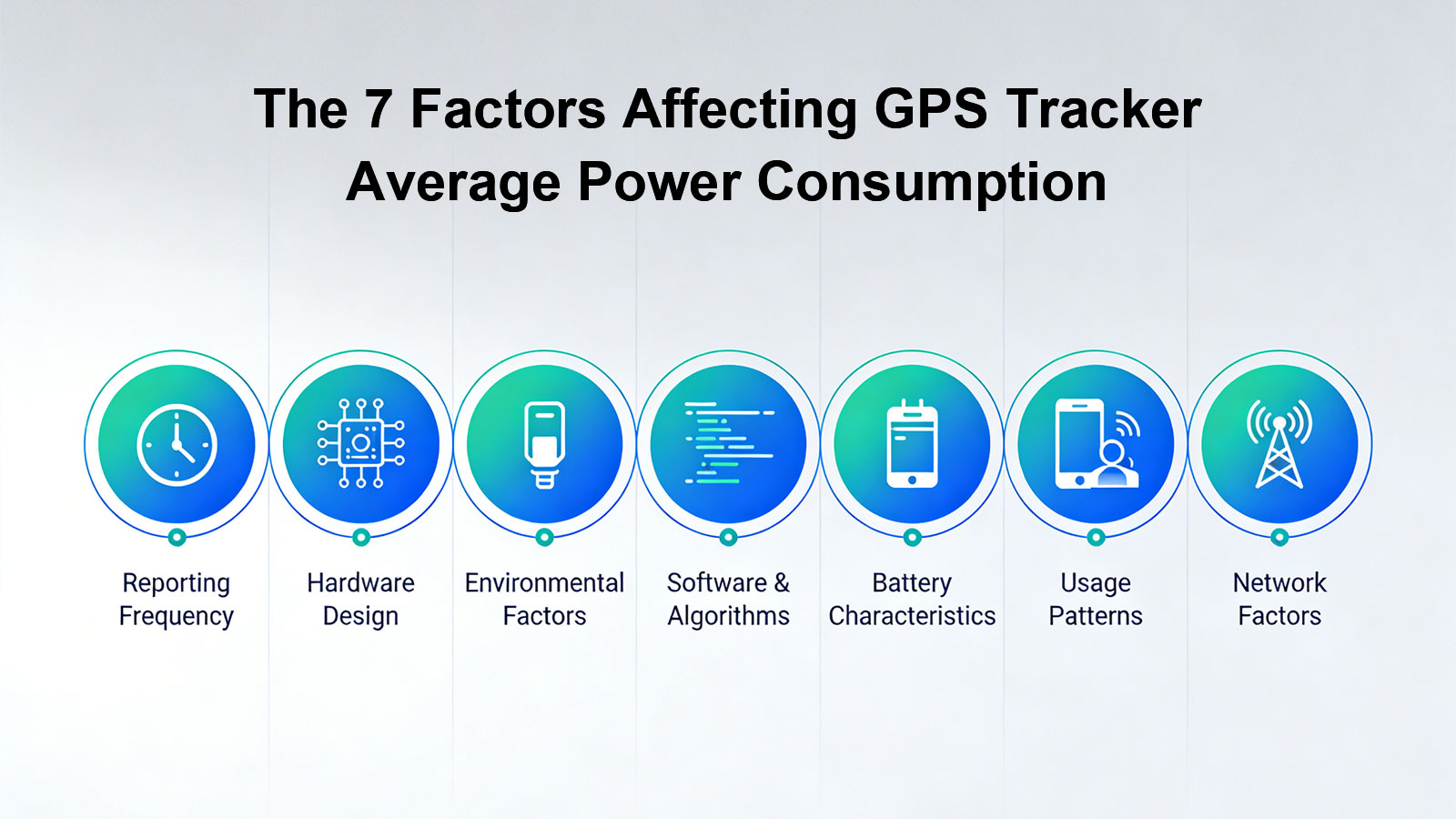
While this formula appears simple, "average power consumption" is the true variable. Through extensive real-world testing and analysis, we have identified that the factors influencing average power consumption can be categorized into seven influencing factors:
| No. | Affect Factors | Impact Level | Controllability | Remark |
| 1 | Reporting Frequency | Extremely High | User-configurable | |
| 2 | Hardware Design | High | Determined during selection | |
| 3 | Environmental Factors | Moderately High | Determined during selection | |
| 4 | Software and Algorithms | Moderately High | Determined during selection | |
| 5 | Battery Characteristics | Moderate | Determined during selection | |
| 6 | Usage Patterns | Moderate | Determined during selection | |
| 7 | Network Factors | Moderate | Local telecom operator determined |
Ⅱ. Reporting Frequency: The 1st Variable for Battery Duration
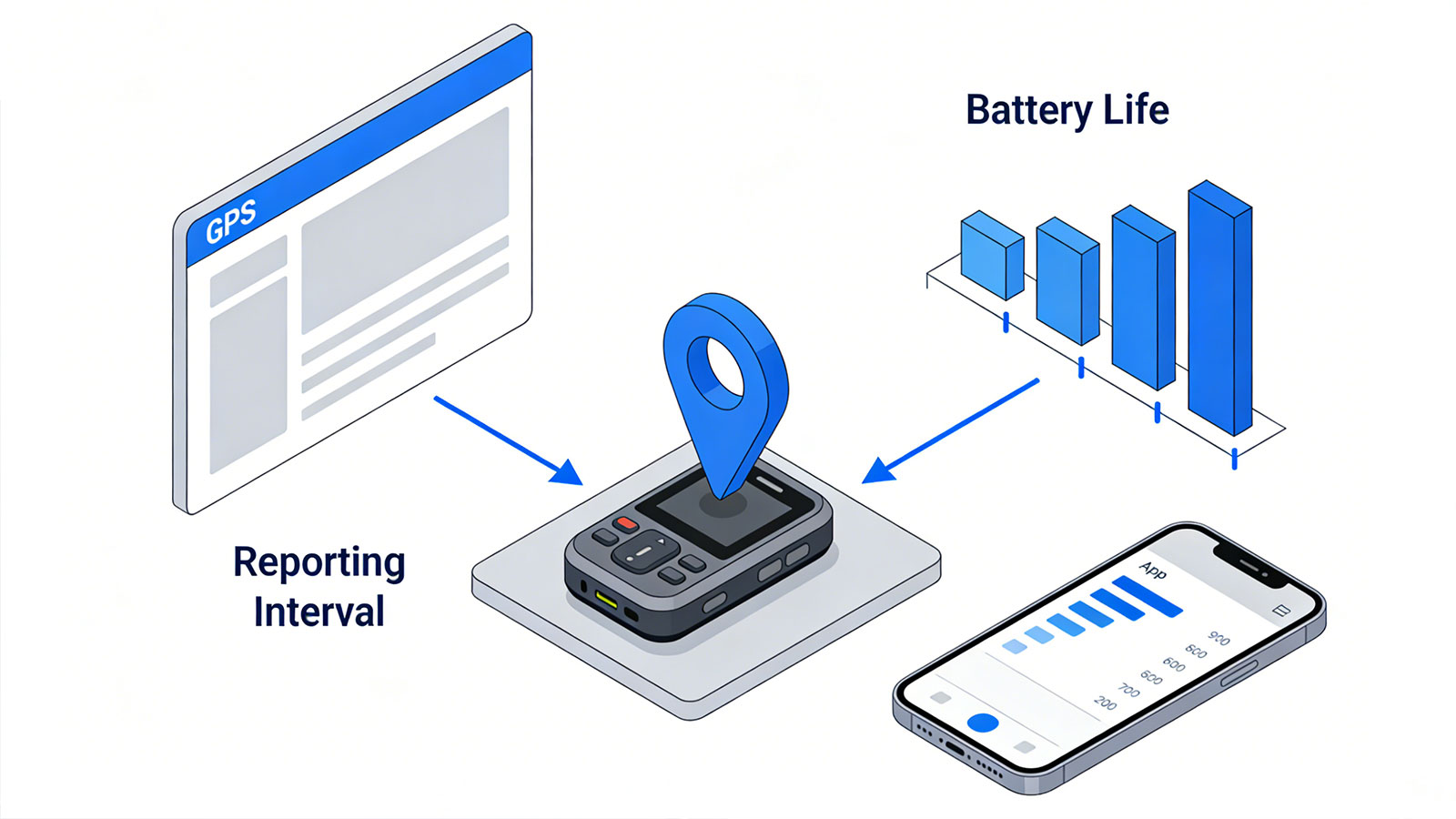
Reporting frequency refers to the interval at which a GPS device transmits location data to the platform, this is a factor that users can directly control, and it is also the most significant factor affecting battery life.
2.1 Relationship Between Reporting Frequency and Power Consumption
| Reporting Interval | Daily Reporting Frequency | Power Consumption | Applicable Scenarios |
| 10 seconds | 8640 times | Extremely High | Real-time Anti-theft |
| 30 seconds | 8640 times | High | Urban Tracking & Personal Safety |
| 1 minute | 1440 times | Moderately High | Daily Fleet Management |
| 5 minute | 288 times | Medium | Logistics Monitoring |
| 10 minutes | 144 times | Moderately Low | Asset Tracking |
| 60 minutes | 144 times | Low | Long-term Asset Monitoring |
| 1 day | 1 time | Extremely Low | Field Equipment & Statistical Analysis |
2.2 Theoretical Data (based on a 1000mAh battery)
| Reporting Interval | Average Daily Power Consumption | Theoretical Battery Life | Relative Benchmark |
| 1 minute | 120-150mAh | 7-8 days | 1x |
| 5 minutes | 40-60mAh | 17-25 days | 2.5-3x |
| 10 minutes | 20-30mAh | 33-50 days | 5-6x |
| 60 minutes | 5-8mAh | 125-200 days | 15-25x |
Conclusion: The theoretical battery life differs significantly from the actual battery life. The information presented above serves to demonstrate that extending the reporting interval from 1 minute to 10 minutes can boost battery life by 5 to 6 times—making this the most effective method for extending battery longevity.
Ⅲ. Hardware Design: The Foundation for Battery Life
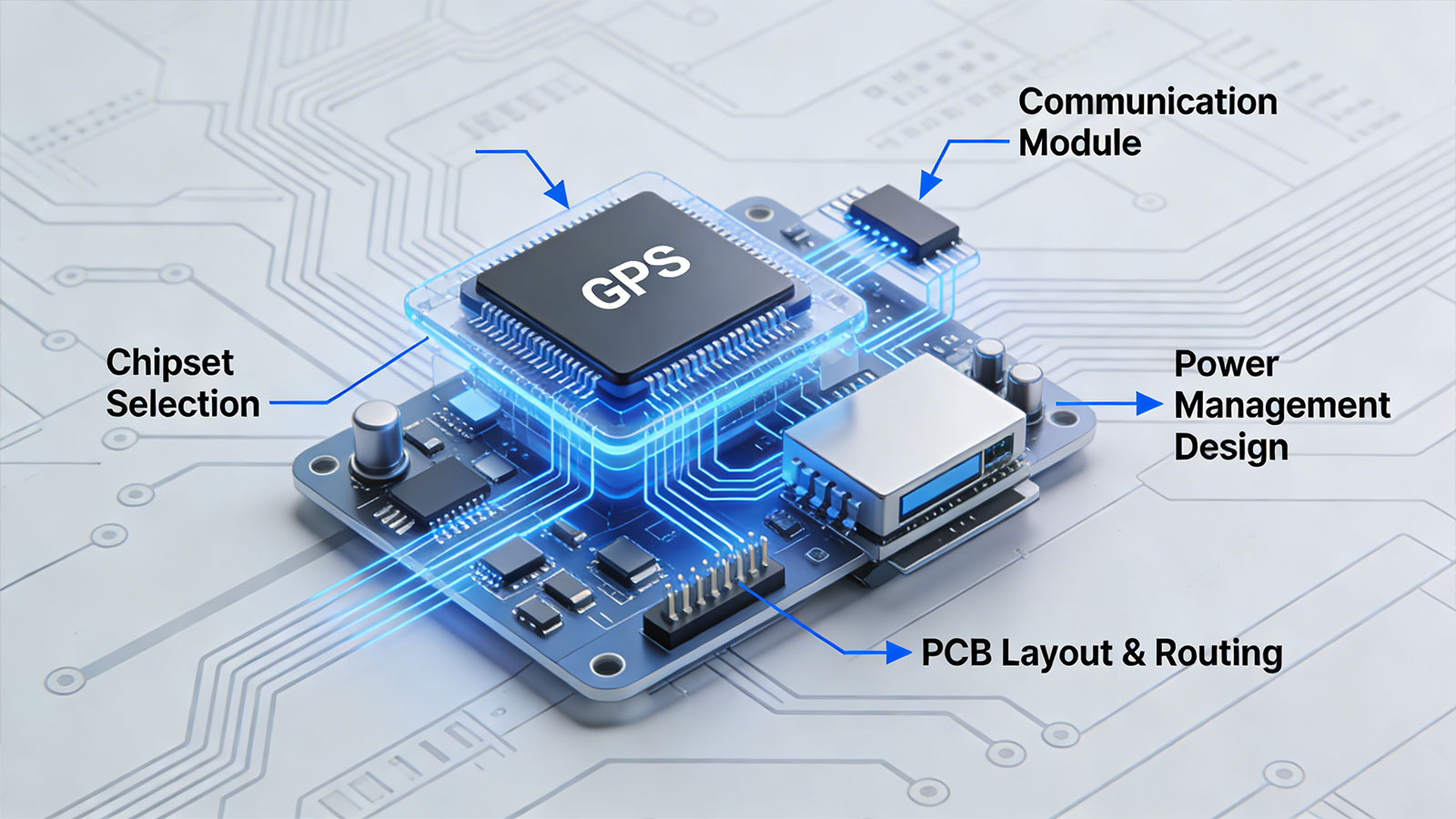
Hardware design determines the "lower bound" of power consumption. No matter how clever the software, it cannot compensate for the inherent limitations of the hardware.
3.1 Chipset Selection
| Chip Type | Typical Power Consumption (Working) | Sleep Power Consumption | Features |
| Low-Power MCU | 5-15mA | 2-5μA | Suitable for simple applications |
| Integrated IoT Chip | 20-50mA | 5-10μA | Suitable for simple applications |
| High-Performance Application Processor | 100-200mA | 50-100μA | Suitable for complex applications (e.g., smartwatches) |
Our Approach: We select chips based on the specific application scenario—utilizing ultra-low-power MCUs for asset tracking, and higher-performance integrated chips for smartwatches.
3.2 Communication Modules
4G communication constitutes the largest power consumption component. Power consumption varies significantly across different modules.
| Technology | Power Consumption | Features |
| 4G Cat.1 | 200-300mA (Peak) | Mainstream choice; moderate power consumption |
| 4G Cat.M | 150-250mA (Peak) | Optimized for IoT; lower power consumption |
| NB-IoT | 100-200mA (Peak) | Low power consumption; suitable for infrequent data reporting |
| 2G | 250-350mA (Peak) | Back forward |
Key Optimization: The power consumption associated with module network searching is often overlooked. In areas with weak signal coverage, modules increase their transmission power, potentially boosting power consumption by a factor of 3 to 5. High-quality modules possess superior signal processing capabilities, thereby minimizing inefficient search attempts.
3.3 Power Management Design
High-Efficiency DC-DC: Efficiently converts battery voltage into the specific voltages required by various modules, achieving an efficiency of over 90%.
Load Switching: Completely cuts off power to specific modules when they are not in use, rather than merely placing them in "sleep" mode.
Low Quiescent Current LDO: Selects nanoamp-level LDOs for circuits that require continuous power supply, such as Real-Time Clocks (RTCs).
Power Domain Partitioning: Segregates different functional modules into independent power domains, supplying power on an as-needed basis.
3.4 PCB Layout and Routing
Power Trace Width: Insufficient width leads to IR drop and increased power consumption.
Decoupling Capacitor Placement: Improper placement causes power supply noise and impacts efficiency.
Ground Plane Integrity: Affects signal return paths and indirectly influences power consumption.
Ⅳ. Environmental Factors: The Invisible Killer of Battery Duration
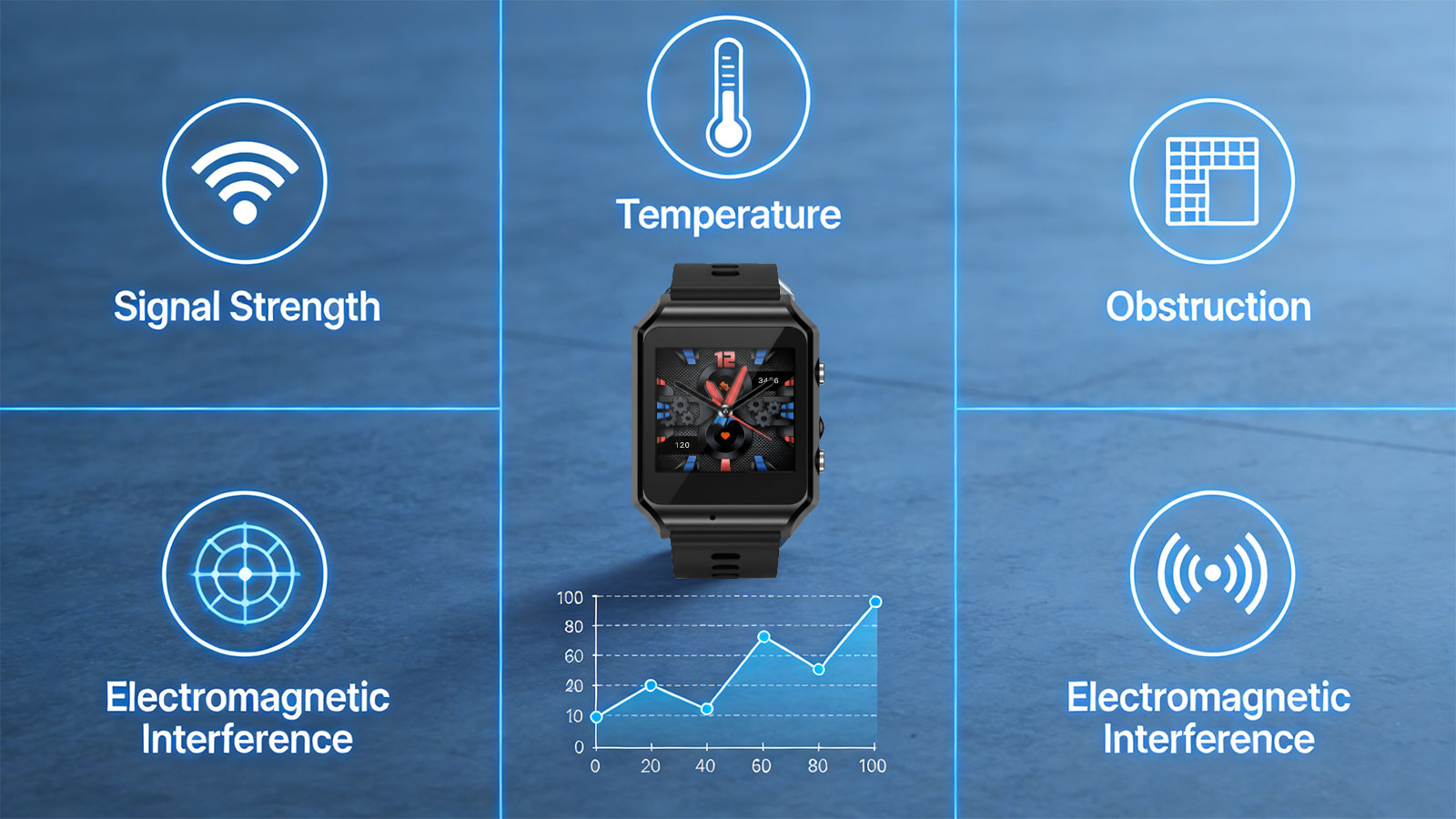
The battery life of the same device can vary twofold depending on the environment. These environmental factors are often overlooked, yet they have a profound impact.
4.1 Signal Strength
This is the most significant variable among environmental factors.
| Signal Strength | Relative Communication Power Consumption | Description |
| Strong Signal (-70 dBm) | 1x | Base station proximity, low transmit power |
| Moderate Signal (-85 dBm) | 1.5-2x | Requires higher power compensation |
| Weak Signal (-95 dBm) | 3-4x | Signal quality degrades; retransmissions increase |
| Very Weak Signal (-105 dBm) | 5-8x | Frequent retransmissions lead to a sharp surge in power consumption |
Real Case Study: The same device lasts 10 days on a single charge in a city center (strong signal), but may only last 3–4 days in a remote suburb (weak signal). This is not a device malfunction, but rather a matter of physical laws.
4.2 Temperature
Batteries are temperature-sensitive devices.
| Temperature | Available Capacity (100% at 25°C) | Impact |
| 25°C | 100% | Benchmark |
| 0°C | 85-90% | Capacity degradation; increased internal resistance |
| -10°C | 70-80% | Significant attenuation |
| -20°C | 50-65% | Battery life halved |
| 40°C | 95-100% | Accelerated self-discharge |
Extreme Environment Adaptation
For low-temperature environments, a self-heating battery can be configured (consuming additional power).
For high-temperature environments, avoid direct sunlight and select a shaded installation location.
4.3 Obstruction Conditions
Obstruction affects not only positioning but also communication.
Metal Obstruction: Signals are completely blocked; the device will continuously attempt to reconnect, resulting in a drastic increase in power consumption.
Concrete Structures: Signal attenuation of 20–30 dB occurs, requiring higher transmission power.
Tree Cover: Moisture within the leaves absorbs signals, causing signal attenuation.
Human Body Obstruction: Signal attenuation of 10–20 dB occurs; this factor must be taken into account for wearable devices.
4.4 Electromagnetic Interference
Vehicle Ignition System: Generates broadband noise, affecting receiver sensitivity.
High-Power Motors: Generate electromagnetic radiation, interfering with communications.
Co-channel Interference: Other nearby wireless devices may cause interference.
Ⅴ. Software and Algorithms: The Intelligent Steward of Power Consumption
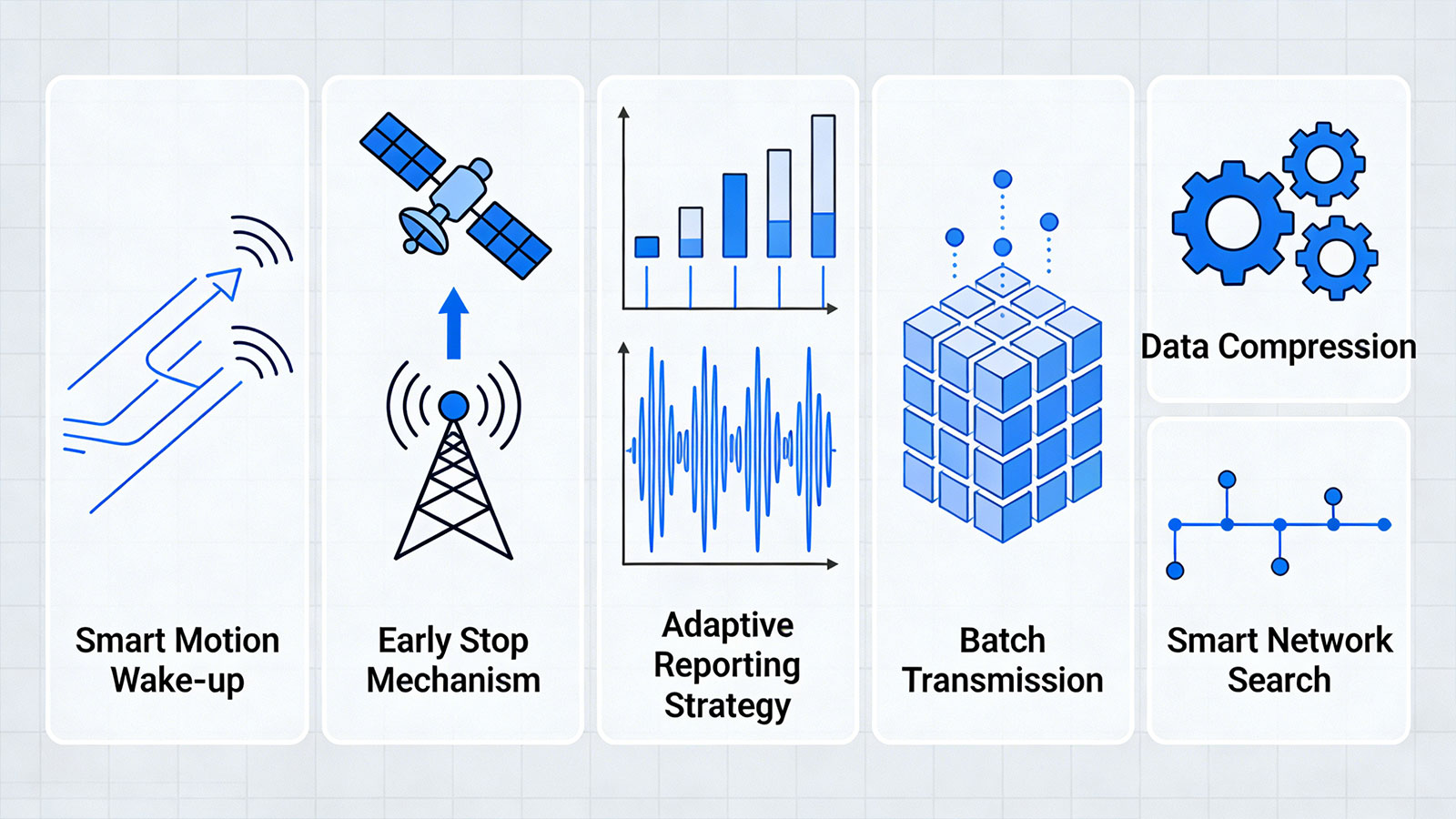
Excellent software algorithms can significantly reduce power consumption without sacrificing functionality.
5.1 Intelligent Motion Wake-up
Principle: An accelerometer performs real-time monitoring; the device enters a deep sleep state (at the μA level) when stationary and wakes up upon detecting motion.
Benefit: Saves 60–80% of power.
Key Factor: The sensitivity settings of the accelerometer must strike a balance between "reliably detecting motion" and "avoiding frequent false wake-ups."
5.2 Early Termination Mechanism
Principle: If fewer than three satellites are detected within a 3-second window, GPS positioning is immediately terminated, and the system switches to base station positioning.
Effect: Prevents unnecessary power consumption in weak-signal areas (a single failed GPS attempt consumes approximately the same amount of power as 35 Wi-Fi scans).
Field Testing: In "urban canyon" environments, this mechanism reduces the number of failed GPS attempts by 30–50%.
5.3 Adaptive Reporting Strategy
Principle: Dynamically adjusts reporting frequency based on motion status, remaining battery power, and signal quality.
Example: Reports normally when battery power exceeds 50%; automatically reduces frequency when power drops below 20%; reports only SOS alerts when power falls below 5%.
Effect: Ensures critical functionality during crucial moments while simultaneously extending overall battery life.
5.4 Batch Transmission
Principle: Multiple data points are bundled together for upload, thereby reducing the number of network connection instances.
Effect: Uploading 10 data points in a single batch consumes approximately 40% less communication power compared to performing 10 separate uploads.
Applicability: Scenarios where real-time performance is not a strict requirement (e.g., asset tracking, environmental monitoring).
5.5 Data Compression
Principle: Uses algorithms to compress data volume, thereby reducing transmission time.
Effect: Can reduce transmission power consumption by 20–40%.
Implementation: Lightweight algorithms such as differential encoding and run-length encoding.
5.6 Intelligent Network Search Strategy
Principle: In areas with no signal coverage, the network search interval is gradually extended (30 seconds → 5 minutes → 1 hour).
Effect: Prevents battery depletion caused by frequent, futile search attempts in signal-free zones.
Optimization: Upon detecting motion, the device resumes high-frequency network searching to ensure rapid reconnection once it exits the signal blind spot.
Ⅵ. Battery Characteristics: The Essence of Energy Storage
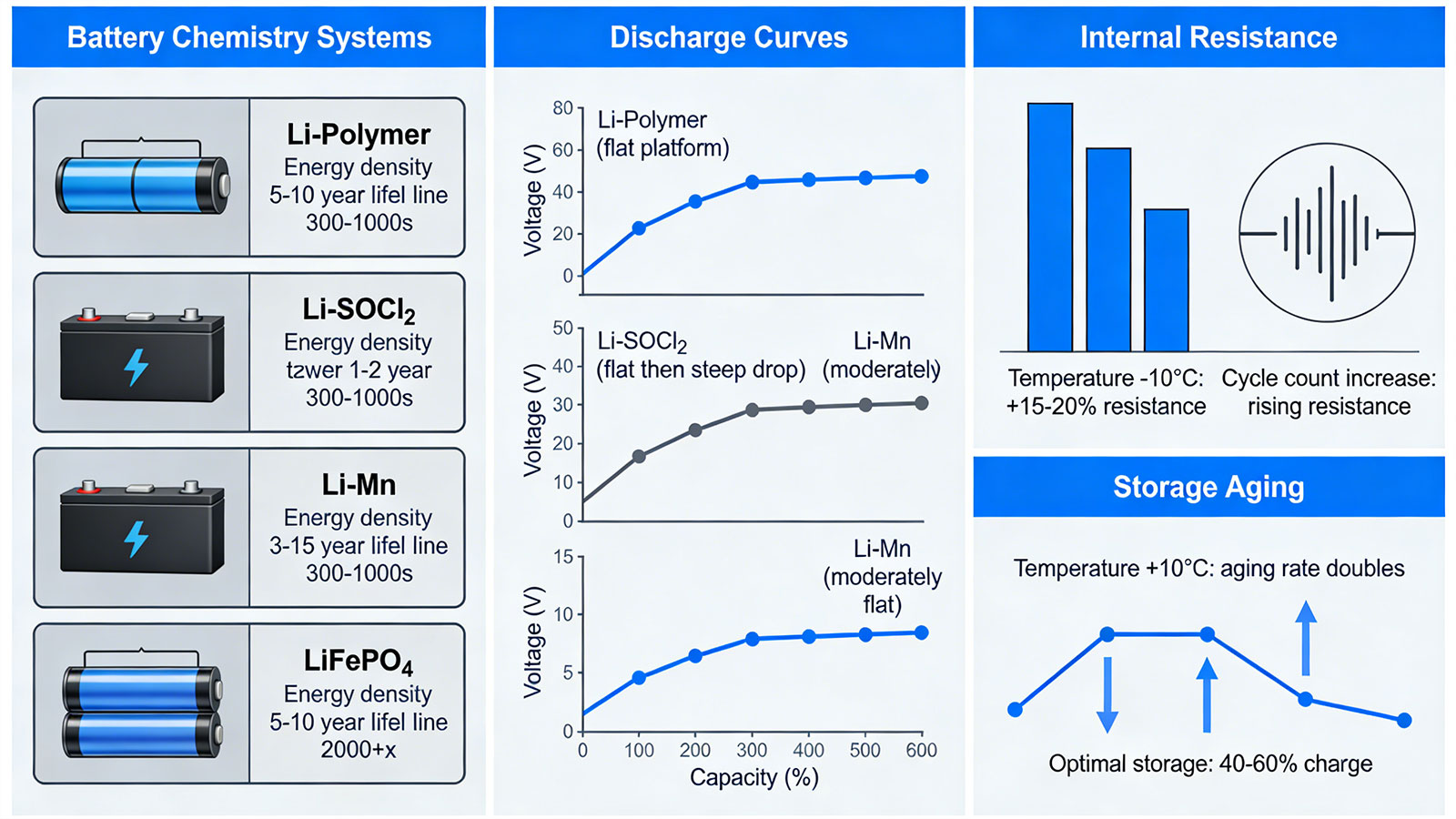
The chemical and physical properties of the battery itself directly affect its usable capacity and discharge characteristics.
6.1 Battery Chemistry System
| No. | Battery Type | Energy Density | Self-Discharge Rate | Cycle Life | Applicable Scenarios |
| 1 | Lithium Polymer | High | 5-10%/year | 300–1000 cycles | Rechargeable Devices |
| 2 | Lithium Thionyl Chloride | Very high | 1-2%/year | Single-use | Long-Endurance Disposable Devices |
| 3 | Lithium Manganese | Relatively high | 3-5%/year | Single-use | Medium-to-Short Endurance Disposable Devices |
| 4 | Lithium Iron Phosphate | Medium | 3-5%/year | 2000+ cycles | Frequent Charge-Discharge Scenarios |
Unique Advantages of Primary Batteries:
Annual self-discharge rate of only 1–2%; retains over 80% of its capacity after 10 years of storage.
deal for long-term deployment and maintenance-free applications (e.g., container tracking, remote field monitoring).
6.2 Discharge Curves
The discharge curves of different battery types vary significantly:
Lithium Polymer: Features a flat discharge plateau and stable voltage, facilitating accurate capacity estimation.
Lithium Thionyl Chloride: Exhibits a very flat discharge plateau; however, the voltage drops steeply in the final stages, necessitating advance warning.
Lithium Manganese: Features a relatively flat plateau, making it suitable for medium-current discharge applications.
6.3 Internal Resistance Characteristics
Low-Temperature Effects: For every 10°C drop in temperature, internal resistance increases by approximately 15–20%.
Lifespan Effects: As the number of charge-discharge cycles increases, internal resistance gradually rises, and usable capacity declines.
Pulse Discharge Capability: The high peak currents required during communication necessitate that the battery possess excellent pulse discharge capabilities.
6.4 Storage Aging
Calendar Life: Batteries undergo aging even when not in use.
Storage Temperature: The rate of aging doubles for every 10°C increase in temperature.
Storage Charge Level: Long-term storage at full charge accelerates aging; the optimal charge level for storage is 40–60%.
Ⅶ. Usage Patterns: The Impact of User Behavior
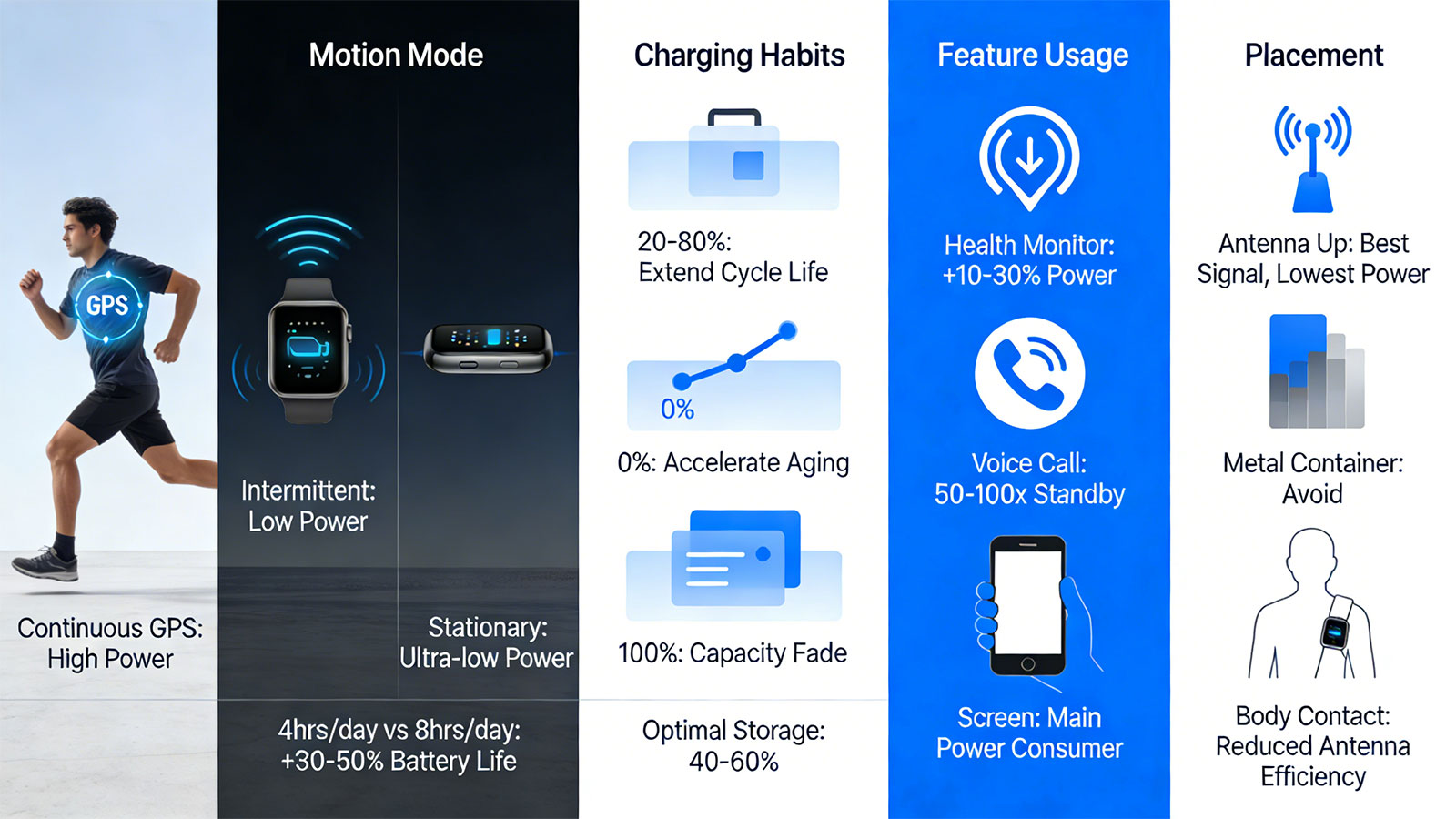
How a user uses a device has a significant impact on battery life.
7.1 Tracking Modes
Continuous Tracking: GPS operates continuously; high power consumption.
Intermittent Tracking: Device can enter sleep mode; low power consumption.
Completely Stationary: Deep sleep mode; extremely low power consumption.
Real-world Testing: For users who track for 4 hours per day, battery life is approximately 30–50% longer than for users who engage in 8 hours of daily activity.
7.2 Charging Habits
Shallow Charging and Discharging: Keeping the charge level between 20% and 80% can extend the battery's cycle life.
Deep Discharging: Frequently draining the battery down to 0% accelerates battery aging.
Long-term Storage at Full Charge: Accelerates capacity degradation; the optimal charge level for storage is 40–60%.
7.3 Feature Usage
Health Monitoring: Enabling features such as heart rate and blood oxygen monitoring increases power consumption by an additional 10–30%.
Voice Calls: During a call, power consumption is 50–100 times higher than in standby mode.
Screen Usage: For devices equipped with a screen, the screen constitutes the primary source of power consumption.
7.4 Installation Location
Antenna Orientation: For optimal signal strength and lowest power consumption, the antenna should face upwards.
Metal Obstruction: Avoid placing the device inside a metal enclosure.
Body-Worn Use: Placing the device in close proximity to the body will compromise antenna efficiency and increase power consumption.
Ⅷ. Network Factors: Impact from the Carrier Side
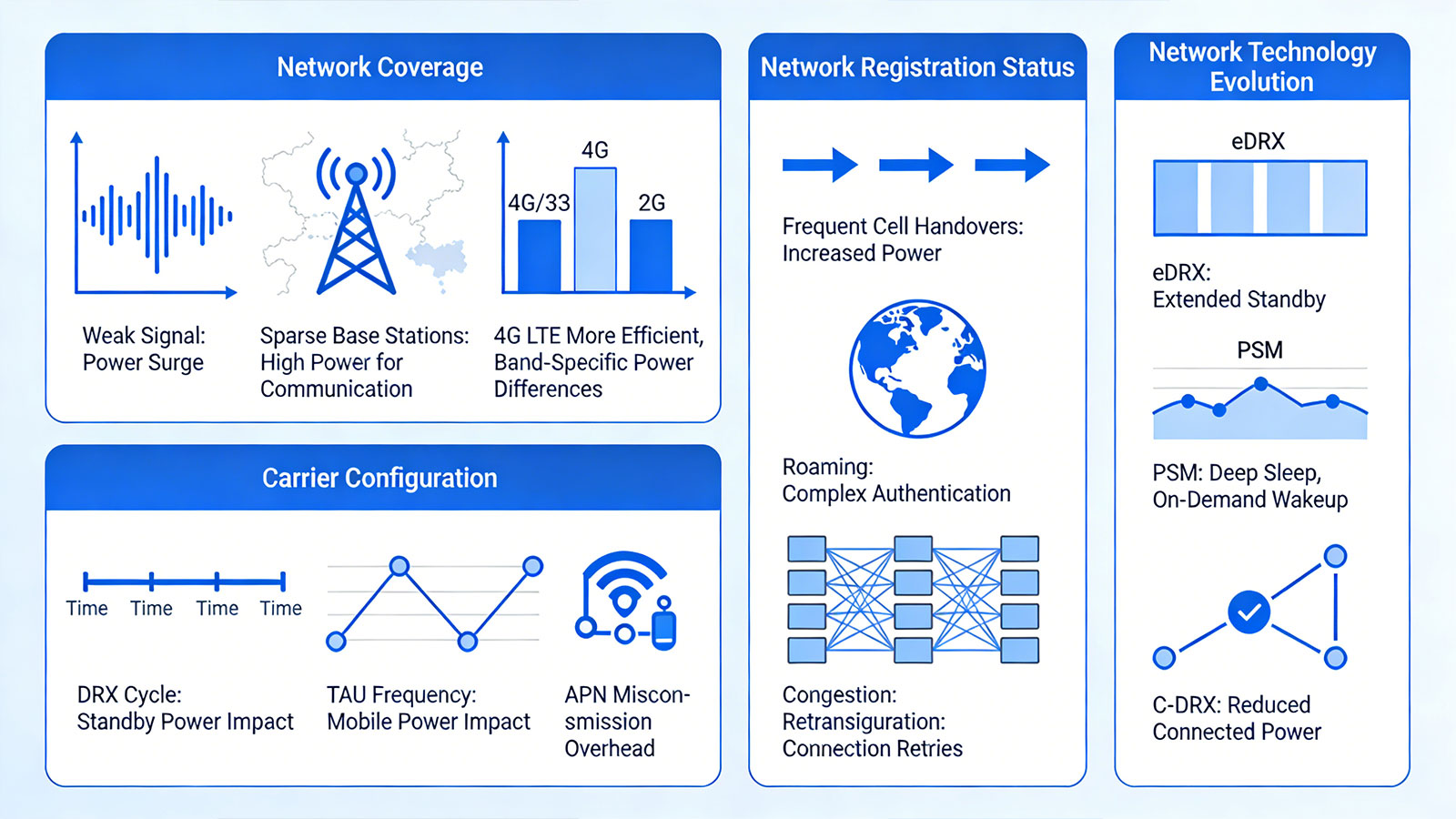
The condition of the network in which the device is situated will also significantly affect power consumption.
8.1 Network Coverage
Signal Strength: As previously noted, power consumption increases significantly in areas with weak signal coverage.
Base Station Density: In areas with sparse base station coverage, devices require higher power output to establish communication.
Network Technology: 4G LTE is more energy-efficient than 3G or 2G; however, power consumption varies across different frequency bands.
8.2 Network Registration Status
Frequent Cell Switching: In areas at the edge of a base station's coverage, the device frequently switches cells, resulting in increased power consumption.
Roaming Status: When roaming, the device may require more complex authentication procedures.
Network Congestion: During periods of congestion, multiple retransmissions are required, leading to increased power consumption.
8.3 Operator Configuration
Paging Cycle: Configurable DRX (Discontinuous Reception) cycle, which impacts standby power consumption.
TAU Cycle: Tracking Area Update frequency, which impacts power consumption in the mobile state.
APN Configuration: An incorrect APN may lead to connection failures and retries.
8.4 Network Technology Evolution
eDRX: Extended Discontinuous Reception (supported by NB-IoT/Cat.M), capable of significantly extending standby time.
PSM: Power Saving Mode; allows devices to enter a deep sleep state for extended periods and wake up on demand.
C-DRX: Connected-mode Discontinuous Reception; reduces power consumption associated with monitoring while in a connected state.
Ⅸ. The Engineering Balance of Battery Duration: There Is No Free Lunch
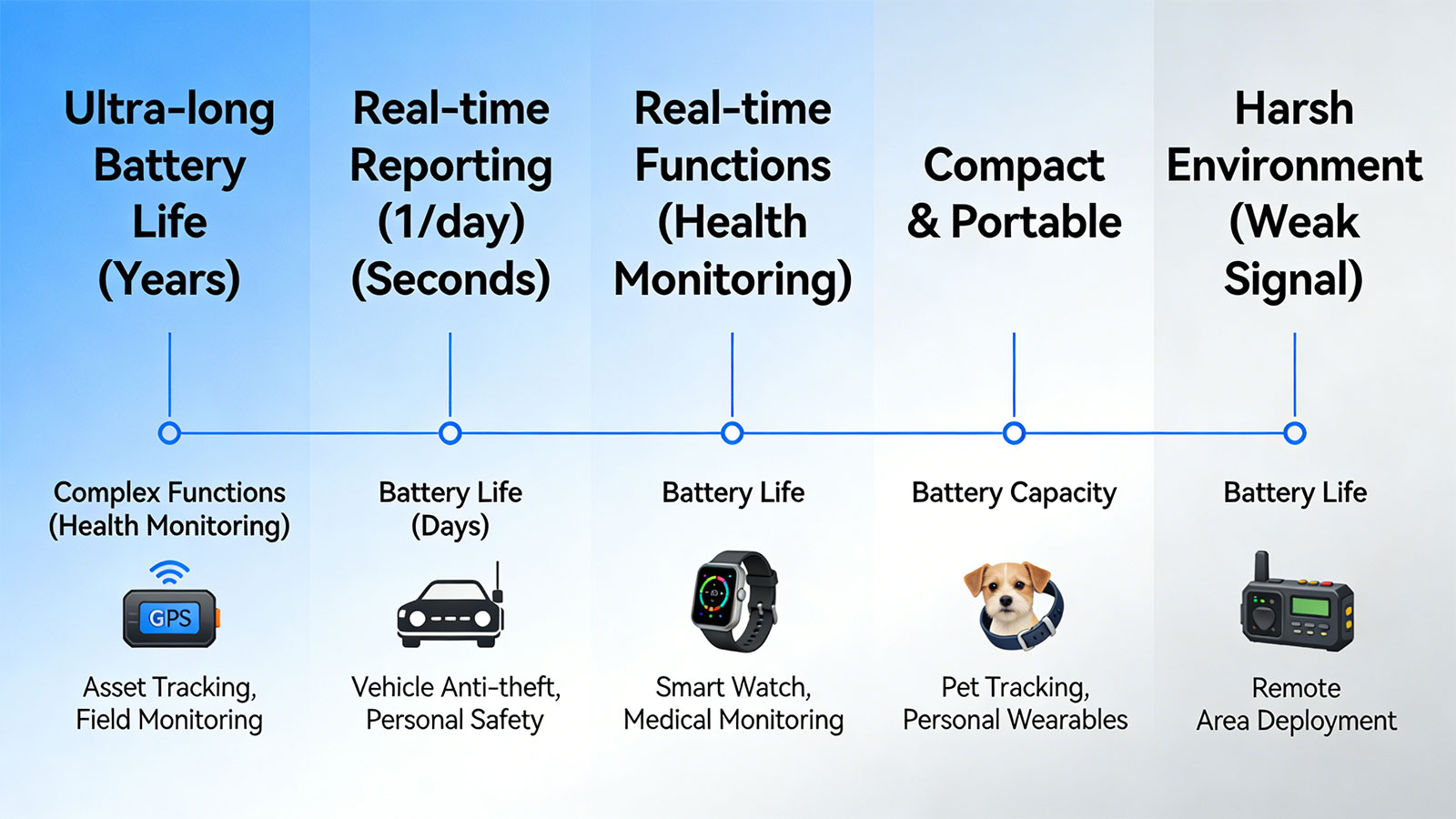
Once you understand the seven major factors outlined above, you will realize that battery range is a systems engineering problem requiring trade-offs across multiple dimensions:
| Target Objectives | Trade-offs required | Applicable Scenarios |
| Ultra-long Battery Life (Measured in Years) | Real-time capability (reporting once daily) | Asset Tracking, Remote Monitoring |
| Real-time Tracking (Second-level Precision) | Real-time capability (reporting once daily) | Vehicle Anti-theft, Personnel Safety |
| Advanced Functionality (Health Monitoring) | Battery life | Smartwatches, Medical Monitoring |
| Compact and Portable | Battery capacity | Pet Tracking, Wearables |
| Harsh Environments (Weak Signal Conditions) | Battery life | Pet Tracking, Wearables |
There is no such thing as perfect equipment—only the optimal balance point for your specific scenario. How do you select the right products for your project? Click here to find out: How to Choose The Right GPS Tracker?
Ⅹ. Huaten Global Practices in Battery Duration Optimization
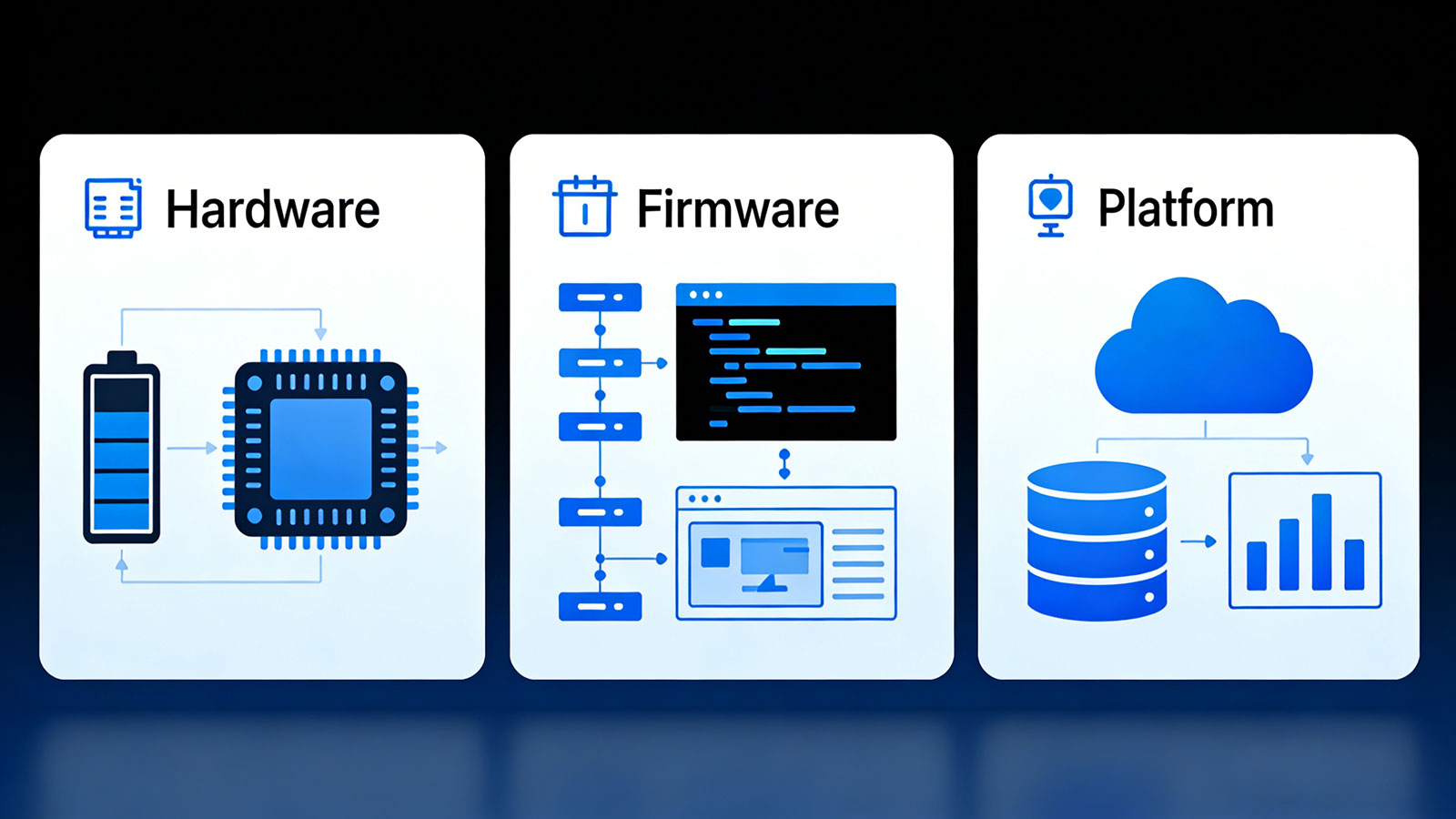
Based on the above principles, we have implemented multi-layered battery life optimization in our product design.
10.1 Hardware Level
Chip Selection: Select the most suitable chip platform based on the specific application scenario, avoiding "overkill."
Power Tiering: Ensure continuous power supply to critical modules (e.g., Real-Time Clock), while completely cutting off power to non-critical modules (e.g., GPS, 4G).
Antenna Optimization: Conduct passive antenna testing and active matching calibration for every product model to ensure optimal radiation efficiency.
Battery Matching: Utilize Lithium-polymer batteries for rechargeable devices, and Lithium-thionyl chloride batteries for long-endurance, non-rechargeable devices.
10.2 Firmware Level
Smart Motion Wake-up: Real-time monitoring via accelerometer; enters deep sleep when stationary and wakes up on demand when in motion.
Early Termination Mechanism: Proactively disengages GPS when signal strength is poor to prevent unnecessary power consumption.
Adaptive Reporting: Dynamically adjusts data reporting strategies based on remaining battery life, signal quality, and motion status.
Batch Transmission: Bundles multiple data points for upload, thereby reducing the frequency of network connections.
10.3 Platform Level
Remote Configuration: Administrators can adjust reporting parameters at any time as needed.
Low Battery Warning: Provides advance notification for battery replacement or recharging.
Health Monitoring: Analyzes battery degradation trends and predicts remaining lifespan.
XI. Recommendations for Corporate Clients
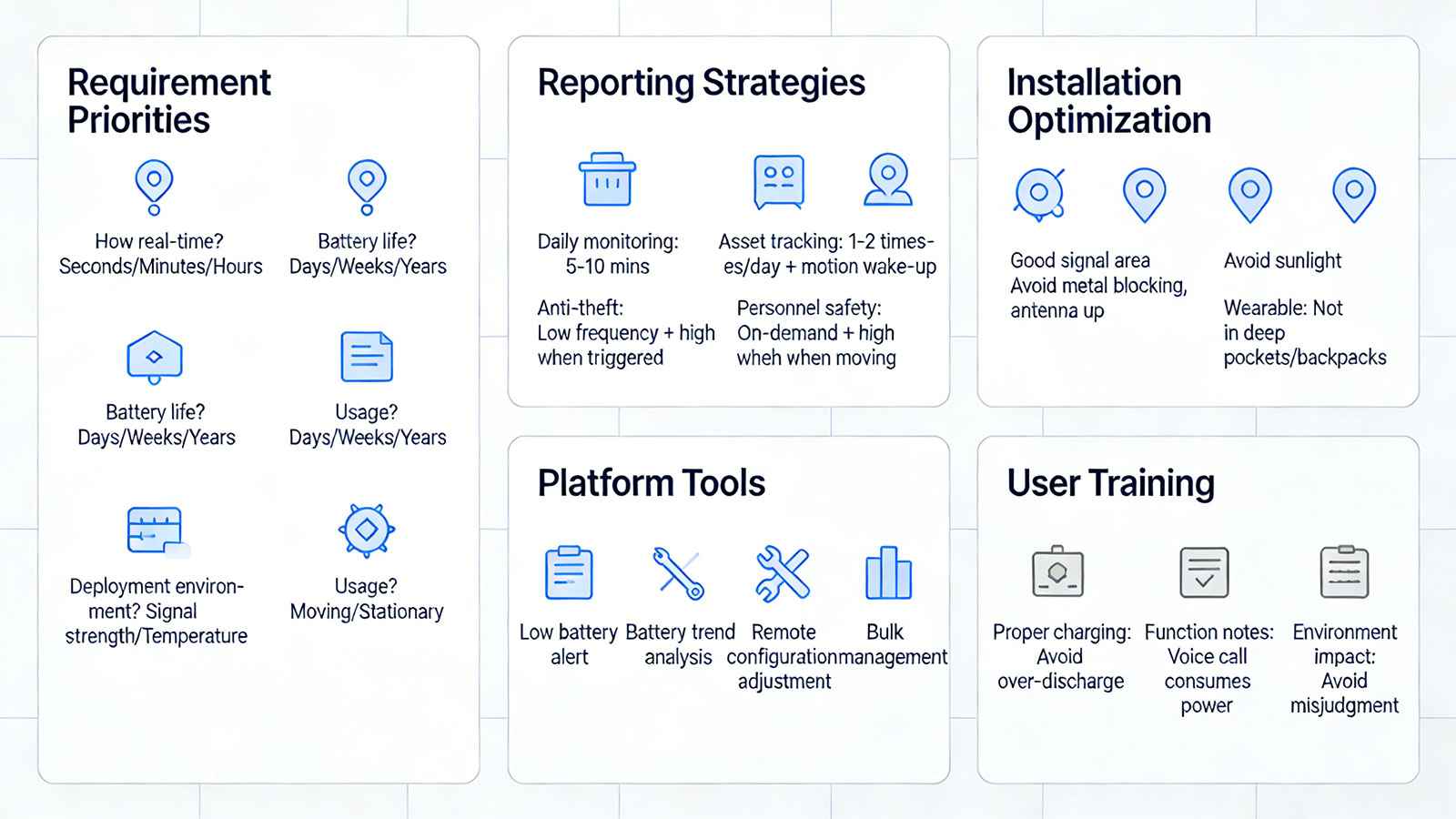
11.1 Clarifying Requirement Priorities
Before selecting a solution, ask yourself:
How real-time do my data updates need to be? (Seconds / Minutes / Hours)
How frequently am I willing to recharge the device? (Every few days / Weeks / Years)
In what environment will the device be deployed? (Signal strength? Temperature range?)
How will the user interact with the device? (Continuous motion or prolonged periods of stillness?)
11.2 Configuring an Optimal Reporting Strategy
Routine Monitoring: 5–10 minutes is sufficient.
Anti-theft Scenarios: Low frequency during normal periods; high frequency once an alert is triggered.
Asset Tracking: 1–2 times per day, combined with motion-based wake-up.
Personnel Safety: Report as needed—high frequency when in motion, low frequency when stationary.
11.3 Optimizing Installation Location
Select a location with strong signal reception to minimize communication power consumption.
Avoid metal obstructions and ensure the antenna is oriented upwards.
Account for temperature effects and avoid direct sunlight exposure.
For wearable devices, avoid placing them in deep pockets or within backpack compartments.
11.4 Leveraging Platform Tools
Monitor low-battery alerts to facilitate proactive maintenance
Analyze battery life trends to detect and address anomalies promptly
Remotely adjust configurations to optimize battery longevity
Enable batch management and unified policy enforcement
11.5 Training End Users
Inform users of proper charging habits (specifically, avoiding deep discharge).
Provide reminders regarding precautions for feature usage (e.g., the power consumption associated with voice calls).
Explain the impact of environmental factors on battery life to prevent misinterpretation.
XII. Summary
The battery life of a GPS tracker is not a single metric, but rather the result of the interplay of seven core factors.
| No. | Factors | Network Factors | Optimization Strategies |
| 1 | Reporting Frequency | Most Controllable Variable: 5–10x Impact | On-demand configuration and dynamic adjustment |
| 2 | Hardware Design | Most Controllable Variable: 5–10x Impact | Selection of industrial-grade chips and power supply optimization |
| 3 | Environmental Factors | Signal, Temperature, Obstruction | Installation optimization and realistic expectations |
| 4 | Software Algorithms | Intelligent Management | Motion-triggered wake-up and early-termination mechanisms |
| 5 | Battery Characteristics | Energy Density, Discharge Characteristics | Selection of a suitable battery chemistry system |
| 6 | Usage Patterns | Energy Density, Discharge Characteristics | User training and guidance for proper usage |
| 7 | Network Factors | Energy Density, Discharge Characteristics | User training and guidance for proper usage |
By understanding these factors, you will be able to:
Select the most suitable device for your specific application;
Optimize reporting strategies to strike the right balance between real-time tracking and battery life;
Accurately interpret variations in battery life, avoiding the misdiagnosis of device malfunctions;
Maximize the operational value of your devices through systematic optimization.
Huaten Global offers a comprehensive range of trackers with battery lifespans ranging from a few days to several years, and provides expert configuration recommendations tailored to your specific use case. No matter what level of battery performance you require, we can match you with the product that best meets your needs.
If you need to estimate real-world battery life for your project or optimize your existing configuration, please feel free to contact our solutions team.
Search
Latest News
IP Protection Ratings is Not Permanent: Is Your GPS Tracking Device Truly Waterproof and Dustproof?
Is that Smartwatch Health Monitoring Medical Grade? - Focus on Trends, Not Medical Grade Disease Diagnosis Criteria
Battery Life Decoding: Seven Key Factors Affecting Your GPS Tracker Battery Duration
Is GPS Positioning Truly Real-Time? — The Truth About "Real-Time" GPS Tracking
Beyond Connectivity: What Your Tracker Can and Cannot Do When Cellular Networks Disappear?