





 Landscape
SIM or No SIM GPS Tracker? Understanding the Connectivity Options Across Different Tracking Technologies
Admin 2026-07-16 485
"Does all GPS trackers require a SIM card? "
This is a very common question from customers, particularly among enterprise clients who are exploring IoT GPS tracking solutions for the first time. The answer is: not all GPS trackers require SIM card, but the vast majority of those capable of providing real-time remote monitoring do.
Let me break this down for you in detail to help you understand how different types of trackers operate, and how to make the right choice based on your specific business needs.
Ⅰ. Why Do Most GPS Trackers Require a SIM Card?
To understand this issue, one must first distinguish between the two core functions of a GPS tracker:
1) Positioning (Acquiring Coordinates): Receiving GPS satellite signals to calculate the current location.
2) Transmission (Sending Data): Transmitting location information to the user (via mobile phone or computer).
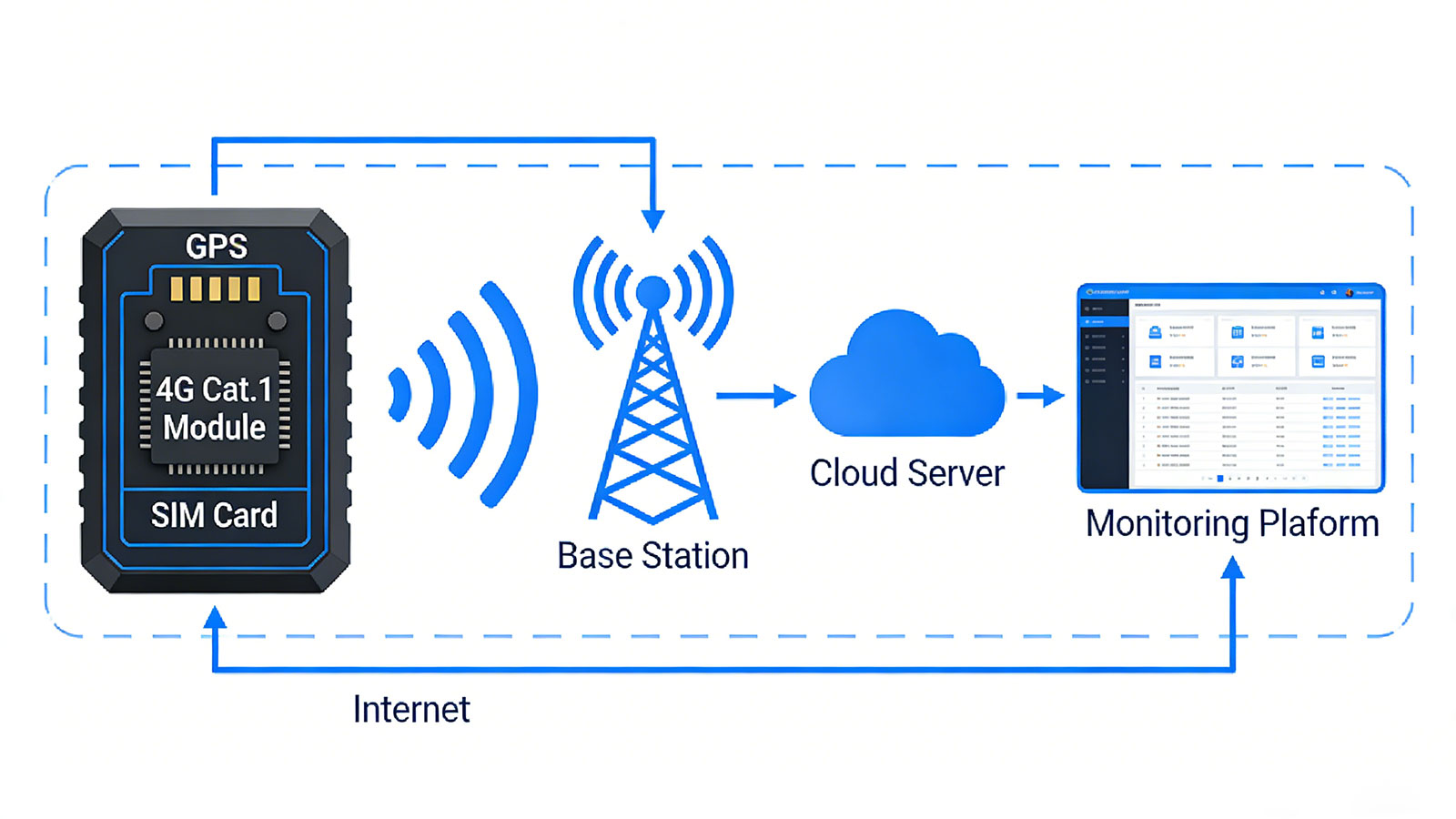
GPS reception itself does not require a SIM card—it passively receives satellite signals; this process is free and unidirectional. However, if you wish to remotely view the device's location, you need a means to transmit data from the device to your mobile phone—and this is where the SIM card comes into play.
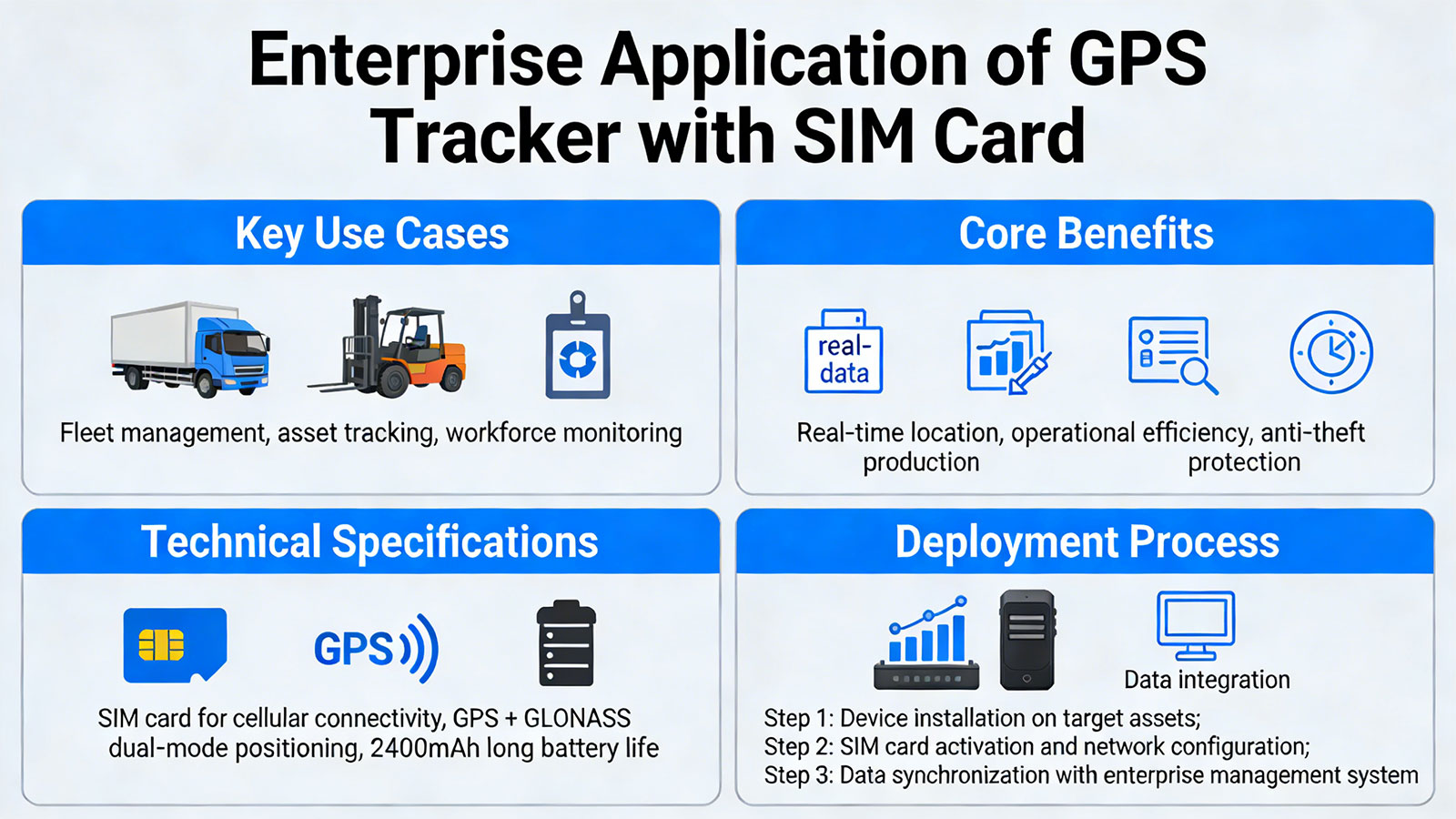
The core function of a SIM card is to serve as the tracker's "pass" for connecting to the cellular mobile network. Utilizing its built-in cellular module (such as 4G Cat.1) and the network access capabilities provided by the SIM card, the tracker transmits GPS coordinates—via base stations and the internet—to a cloud server, where they are ultimately displayed on your monitoring platform.
Simply put: without a SIM card, the device knows where it is, but you do not.
Ⅱ. The Truth About "SIM-Free" Trackers
There are indeed GPS trackers on the market advertised as "SIM-free." What exactly is the story behind this?
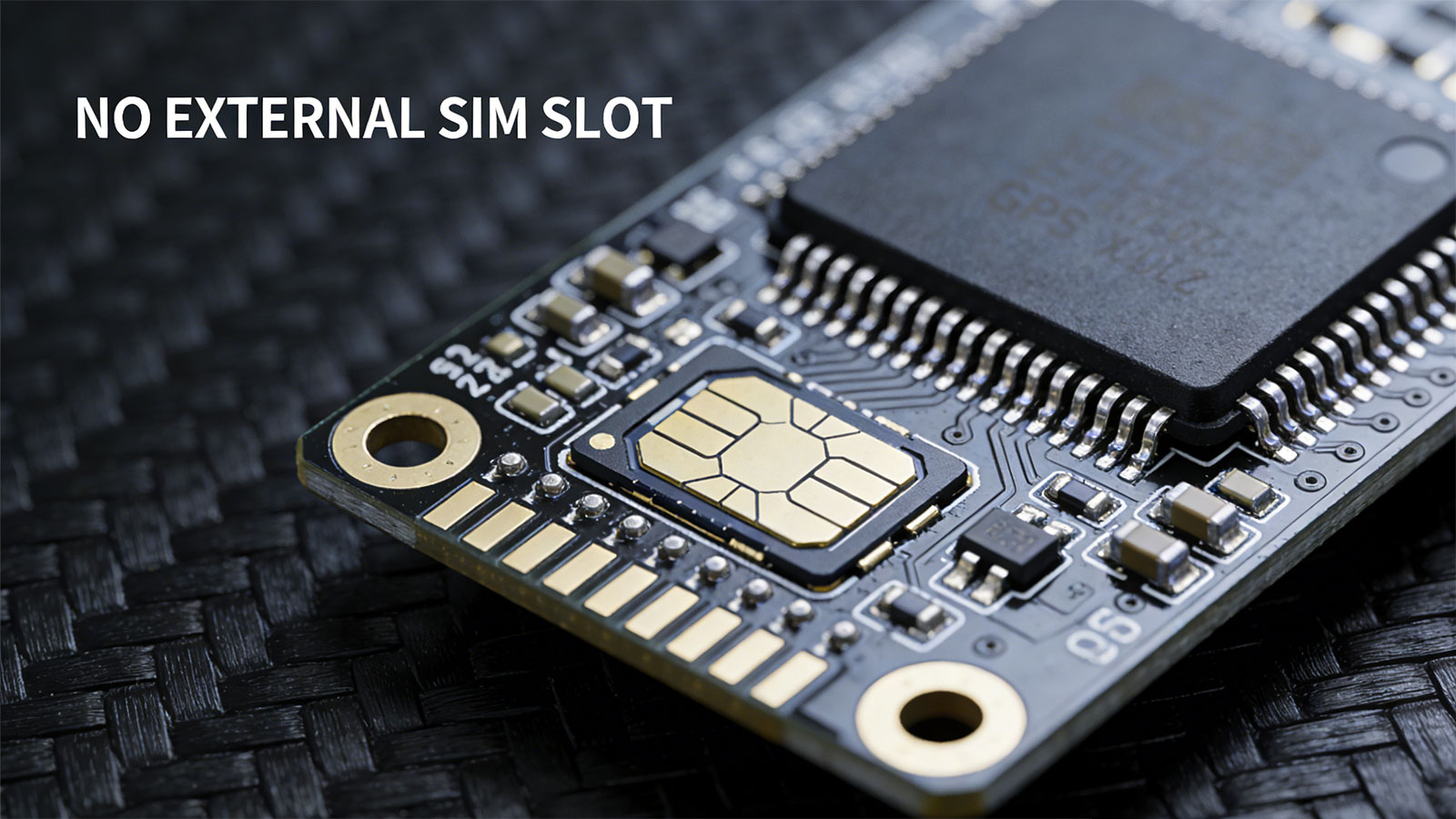
The so-called "card-free" design does not mean that a SIM card is truly unnecessary; rather, the SIM card chip is directly soldered (surface-mounted) onto the device's mainboard, eliminating the need for a removable card slot. This approach offers the following:
Advantages: Enhanced resistance to vibration and water ingress, prevention of accidental card removal by users, and simplified installation.
Essence: It remains dependent on cellular networks and still requires a SIM card; the only difference lies in its physical form factor.
This type of "embedded SIM"—commonly referred to as an eSIM or MFF2 surface-mount card—is frequently found in industrial-grade devices requiring high levels of environmental protection.
Ⅲ. What GPS trackers do not require a SIM card?
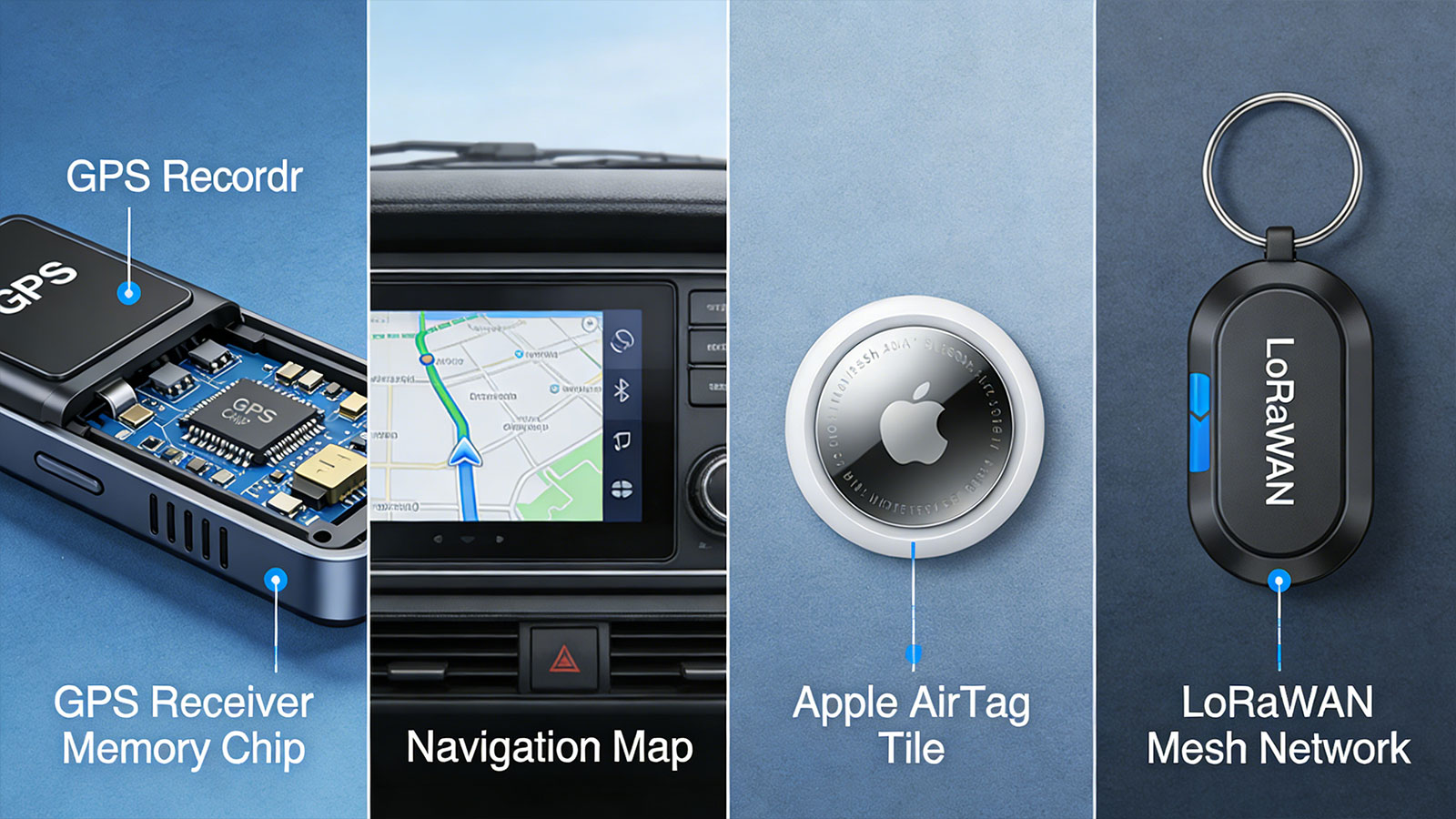
Although real-time remote tracking requires a SIM card, there are indeed several types of positioning devices that do not require one:
3.1 GPS Logger
This type of device records data but does not transmit it. It features an internal GPS receiver and a storage chip, allowing it to log location data at a preset frequency; however, it does not transmit this information in real time. Users must connect the device to a computer via a USB cable after their journey is complete to manually export the data and review their route.
Suitable Applications: Outdoor enthusiasts recording hiking routes, athletes analyzing training trajectories, and scientific data collection. It is not suitable for business scenarios that require real-time monitoring.
3.2 In-Vehicle Navigation Systems (GPS Navigation)
These devices feature a built-in screen; once a GPS fix is established, they display maps and location data directly on the device's display, eliminating the need to transmit data elsewhere.
Applicable Scenarios: Personal in-vehicle navigation. Not suitable for asset management applications requiring remote monitoring.
3.3 Bluetooth Trackers (e.g., Apple AirTag, Tile)
Strictly speaking, these devices are not true GPS trackers; rather than utilizing GPS satellites for positioning, they rely on Bluetooth signals and a network of surrounding Apple or Android devices to estimate their location.
Suitable Applications: Locating items at close range, such as keys or backpacks. Not suitable for long-distance asset monitoring or scenarios requiring real-time tracking capabilities.
3.4 Trackers Based on LoRaWAN or Mesh Networks
This represents a new solution that has emerged in recent years. For instance, devices utilizing the open-source Meshtastic protocol leverage LoRa radio technology to form a "mesh network" among themselves; data is relayed from one device to another, eliminating the need for a cellular network or a SIM card entirely.
Applicable Scenarios: Emergency disaster communications, remote regions, and areas lacking cellular network coverage. Limitations: Requires a sufficient number of nodes to establish network coverage; data transmission range and bandwidth are limited.
Ⅳ. Comparison of Different Tracker Types
To help you gain a more intuitive understanding, I have summarized the mainstream tracker types below:
| No | Tracker Types | Is a SIM card required? | Support real-time tracking? | Typical Applications | Brands& Technologies |
| 1 | Real-time Cellular Trackers | ✅ | ✅ | Vehicles, Assets, Personal, Pets | Huaten Global, Tractive, Tracki |
| 2 | Satellite Communication Trackers | ⚠️ Some | ✅ | Polar, Marine, and Remote Wilderness Expeditions | Garmin InReach, Spot |
| 3 | GPS Loggers | ❌ | ❌ | Outdoor Sports and Scientific Research Documentation | Renkforce |
| 4 | In-Vehicle Navigation Systems | ❌ | ❌ | Vehicle Navigation | Garmin |
| 5 | Bluetooth Trackers | ❌ | ⚠️ Dependent on surrounding mobile network coverage | Short-Range Item Tracking | Apple AirTag |
| 6 | LoRa Mesh Trackers | ❌ | ✅ | Emergency Communication and Cellular-Free Zones | Seeed |
Ⅴ. Does a satellite tracker require a SIM card?
For scenarios requiring tracking in extreme environments completely devoid of cellular coverage—such as oceans, deserts, or polar regions—satellite trackers provide the solution. These devices utilize satellite communication systems—such as Iridium, Globalstar, or the BeiDou Short Message Service—to transmit data.
Regarding SIM cards: While some satellite trackers do contain internal SIM cards, these cards connect to satellite networks rather than cellular networks. From a user's perspective, there is no need to purchase a SIM card from a traditional mobile carrier; the device typically comes with a built-in satellite communication module and the necessary authentication credentials.
Ⅵ. How to Make Choices for Your Business?
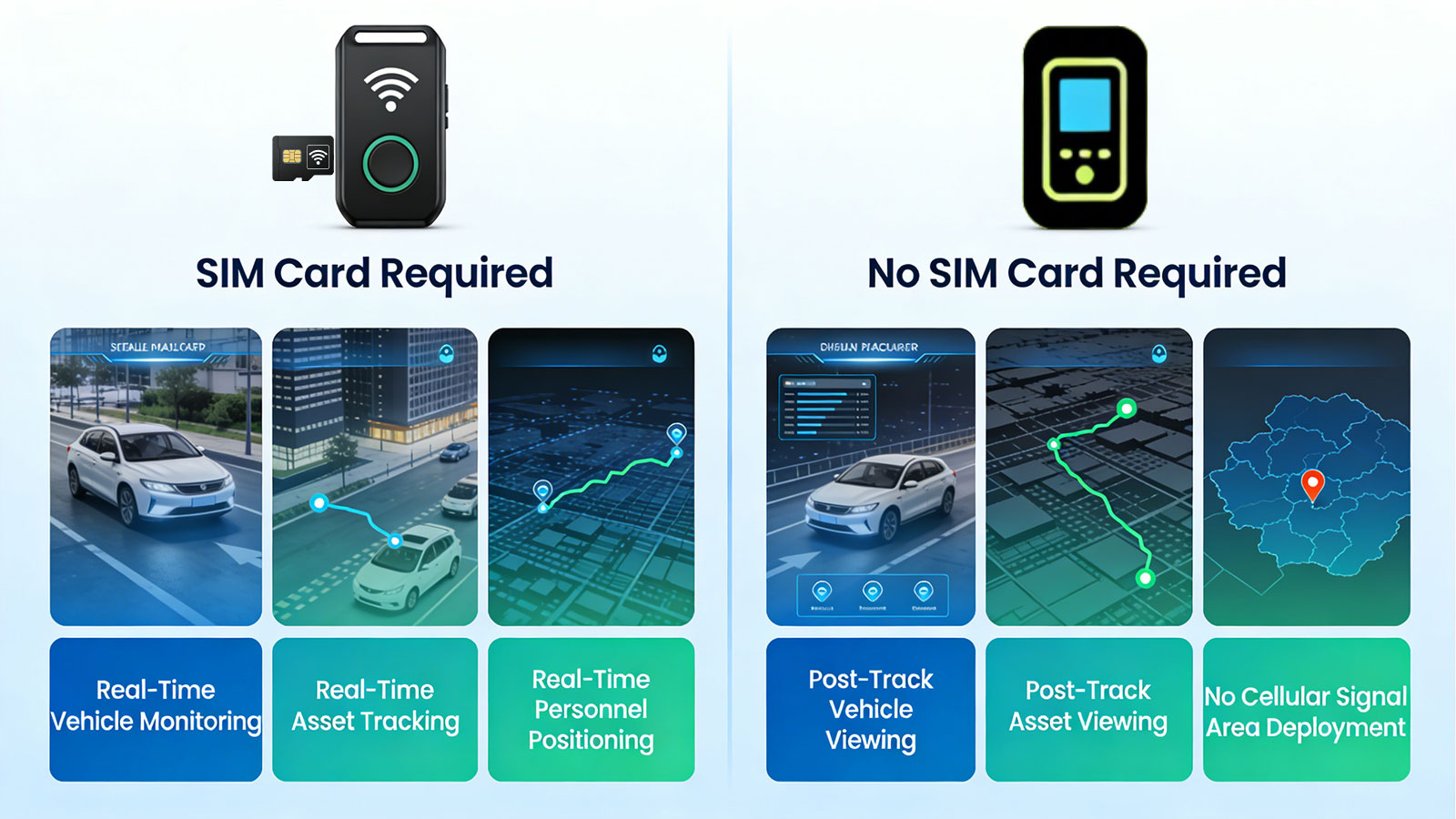
As an enterprise client, you may wish to consider the following decision-making framework when selecting a tracking device:
Scenario 1: You require real-time monitoring of vehicles, assets, or personnal
Conclusion: A SIM card (or eSIM) is required.
The vast majority of enterprise applications—whether for fleet management, asset theft prevention, or personnel safety—demand access to location data in real time. In such cases, you must select a tracker that supports cellular networks, which inherently necessitates the use of a SIM card (either removable or embedded). This is the specific domain in which Huatenglobal specializes. Click Products to view our product catalog.
Scenario 2: You only need to review travel routes retrospectively and do not require real-time monitoring.
Conclusion: You may opt for a GPS data logger; no SIM card is required.
For instance, you might wish to analyze potential optimization opportunities for a specific transport route, or simply record the path taken during a field expedition, without the need for real-time alerts or immediate intervention. In this scenario, a GPS data logger—which operates without a SIM card—can fully meet your requirements while sparing you the cost of monthly data fees.
Scenario 3: The deployment area completely lacks cellular signal coverage.
Conclusion: Consider satellite trackers or LoRa Mesh solutions.
If your operational coverage area genuinely lacks cellular network coverage (e.g., for deep-sea vessels or scientific expeditions in uninhabited regions), a standard cellular tracker—even when paired with a data caching mechanism—can only facilitate "delayed data upload" (sending data retrospectively) rather than providing real-time monitoring. In such instances, you should consider utilizing satellite trackers or self-organizing network solutions based on LoRa technology.
Ⅶ. The Commercial Considerations Behind the "Card-Free" Service
As an innovator and leader in this industry, I would like to share a few observations:
Certain products on the market are marketed as requiring "no SIM card" and incurring "no monthly fees"; however, this often entails compromised functionality. Such devices either lack real-time tracking capabilities (serving merely as data loggers), offer limited positioning accuracy and coverage (as is the case with Bluetooth devices), or rely on specialized network infrastructure (such as LoRa gateways).
A true real-time cellular tracker inherently requires both a SIM card and network service, and inevitably entails ongoing network costs. This is not a "marketing ploy" on the part of manufacturers, but rather a necessity dictated by the fundamental nature of the technology: real-time data transmission consumes mobile network resources, for which network operators must charge a fee.
When designing solutions, we consistently adhere to the principle of transparency:
We clearly disclose hardware costs, network costs, and platform service fees.
We offer a variety of SIM card options (customer-provided, procured on your behalf, or global eSIM data packages).
We optimize plan configurations based on varying data reporting frequencies to help clients control their Total Cost of Ownership (TCO).
Ⅷ. Conclusion
Returning to the initial question: Do all GPS trackers require a SIM card?
No, not all of them do. However, if you require real-time remote monitoring—which is a core requirement for the vast majority of enterprise applications—then yes, you will need a tracker equipped with a SIM card.
Different types of positioning devices cater to distinct scenarios:
Real-time Cellular Trackers: Require a SIM card; suitable for monitoring vehicles, assets, and personnel.
GPS Loggers: Do not require a SIM card; suitable for post-event route analysis.
Bluetooth Trackers: Do not require a SIM card; suitable for locating items within close proximity.
Satellite Trackers: Connect to satellite networks; suitable for areas without cellular coverage.
The key to making the right choice lies in clearly defining your specific business scenario: Do you require real-time tracking? Do you need remote monitoring capabilities? Do you require alert notifications?
Huaten Global offers a comprehensive range of 4G trackers—spanning everything from traditional SIM-card-based models to devices featuring embedded eSIMs—along with accompanying global data management solutions. Regardless of your specific deployment environment, we can provide a solution perfectly tailored to your needs.
If you are planning a new tracking project or have questions regarding SIM card selection, please feel free to contact our solutions team. We can provide an optimal combination of hardware and data plans tailored to your deployment region, reporting frequency, and budget.
Search
Previous
Beyond Connectivity: What Your Tracker Can and Cannot Do When Cellular Networks Disappear?
Next
How does a GPS Tracker Connect to Your Phone and Achieve Remotely Position?
Latest News
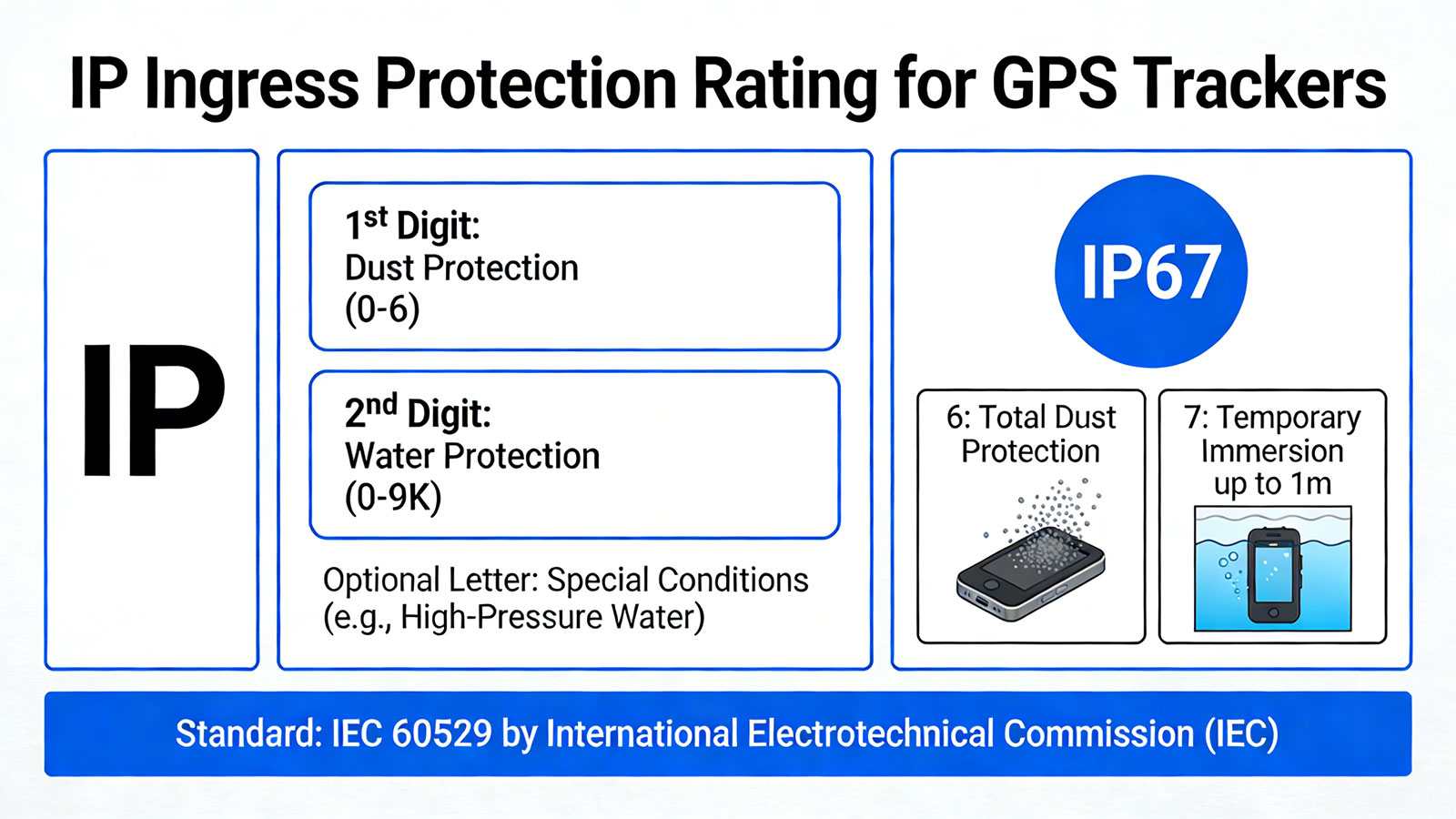
IP Protection Ratings is Not Permanent: Is Your GPS Tracking Device Truly Waterproof and Dustproof?
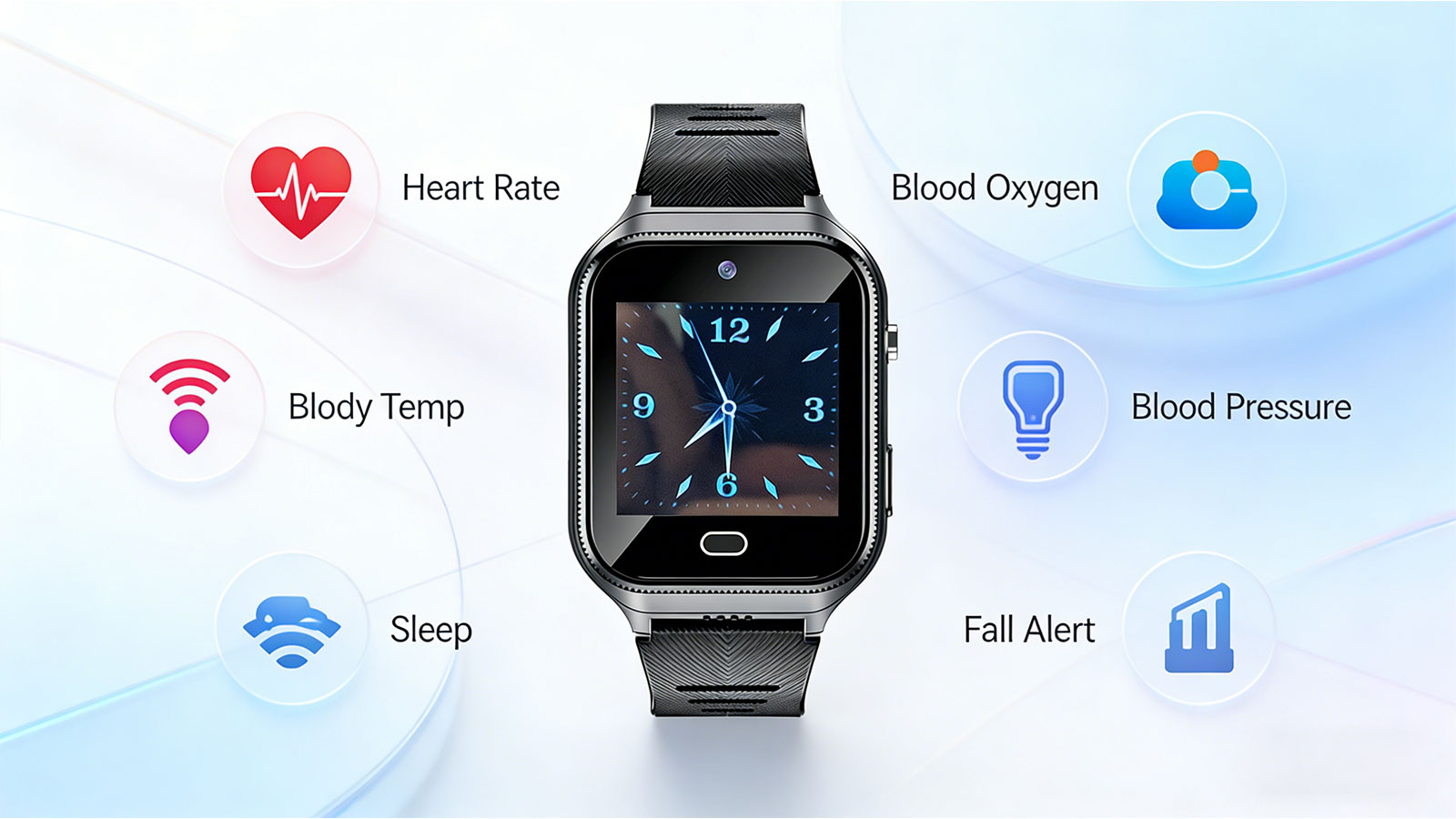
Is that Smartwatch Health Monitoring Medical Grade? - Focus on Trends, Not Medical Grade Disease Diagnosis Criteria
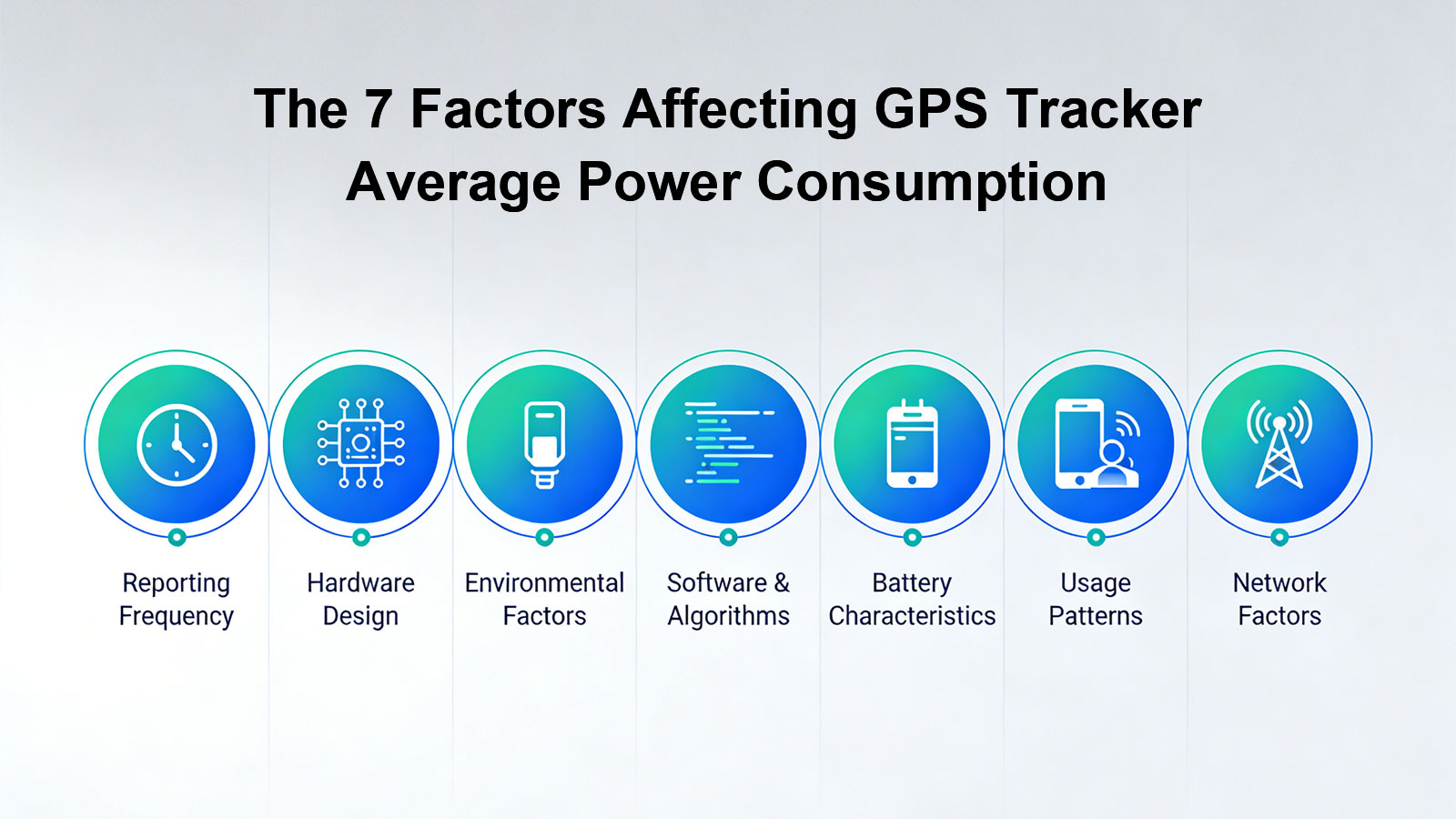
Battery Life Decoding: Seven Key Factors Affecting Your GPS Tracker Battery Duration
Is GPS Positioning Truly Real-Time? — The Truth About "Real-Time" GPS Tracking
Beyond Connectivity: What Your Tracker Can and Cannot Do When Cellular Networks Disappear?